
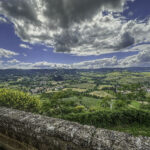
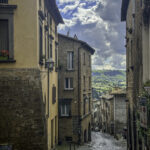
 From Naples, we continued our journey north by train into the heart of Italy, traveling into the central hill country that has anchored settlements since Etruscan times. Our destination was the ancient city of Orvieto, dramatically perched atop a volcanic tuff plateau. As the train climbed inland, the landscape shifted from coastal plains to rolling hills and vineyards—setting the stage for our arrival in one of Italy’s most historic and atmospheric hill towns.
Orvieto is a fortified hill town in Umbria, overlooking the Paglia Valley. Its history reaches back to the 9th century BCE, when it was one of the principal cities of the Etruscan federation, known as Velzna. Etruscan tombs, artifacts, and a network of ancient underground tunnels around the town attest to its early wealth and strategic importance.
After its conquest by Rome in the 3rd century BCE, Orvieto later flourished as a powerful medieval commune and became a favored refuge for the popes. During the 13th century, several popes resided here, commissioning palaces, churches, and fortifications that transformed the town into a temporary papal stronghold.
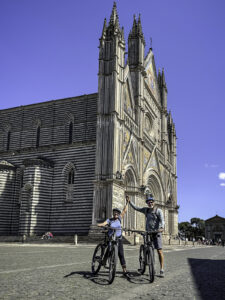
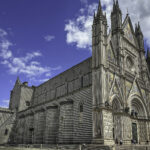
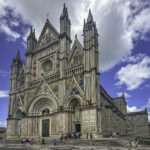
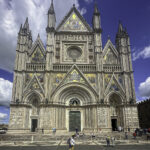
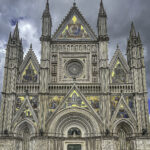
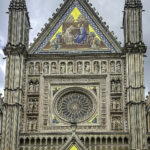
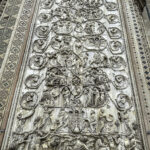
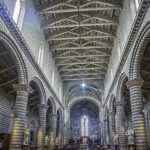
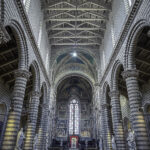
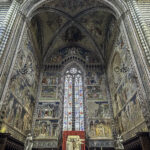
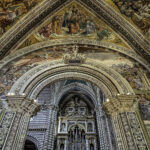
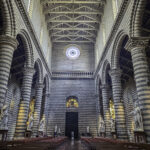
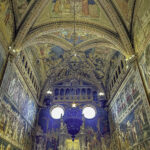
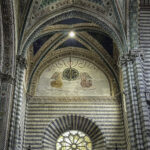
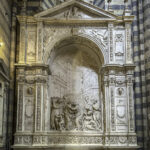
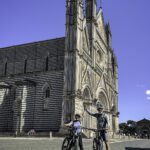
Its most renowned landmark is the Duomo di Orvieto, a Romanesque–Gothic cathedral begun in 1290 to commemorate the Miracle of Bolsena. The cathedral’s spectacular façade—covered in mosaics, sculpted reliefs, and an ornate rose window—fronts an interior decorated with significant fresco cycles. Nearby stand papal palaces, museums filled with Etruscan treasures, and the remarkable Pozzo di San Patrizio, a double-helix well engineered in the 16th century to secure the town’s water supply during times of siege.
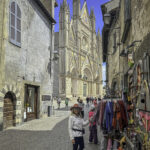
Today, Orvieto’s dramatic clifftop setting, medieval streets, and deep layers of Etruscan, Roman, and papal heritage make it one of central Italy’s most historically significant hill towns. Click on thumbnail to view images








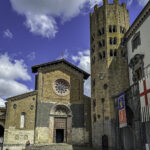
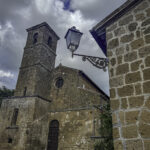

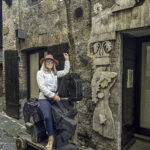
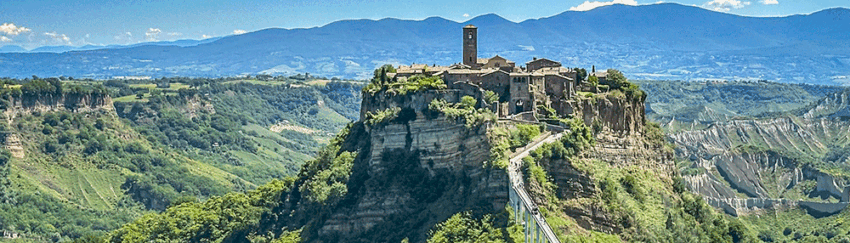
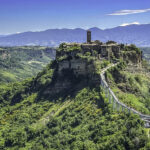
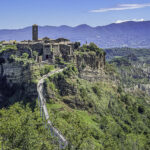
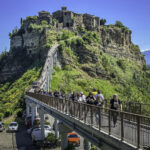
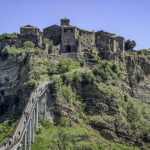
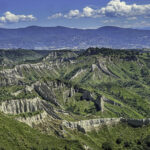
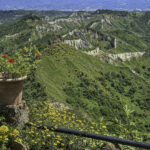
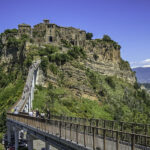
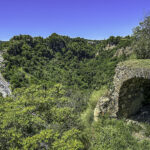
From Orvieto, we set out on a bike tour with our knowledgeable guide to visit the legendary Civita di Bagnoregio, one of Italy’s most striking and fragile hilltop villages. The ride carried us through  beautiful countryside, past vineyards, olive groves, and quiet rural roads, until the dramatic silhouette of Civita appeared—perched on its crumbling plateau, connected to the world by a single footbridge. It was an unforgettable approach to a place often called “the dying city,” yet filled with timeless beauty.
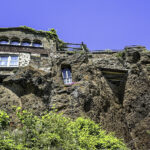
Civita di Bagnoregio,was founded by the Etruscans more than 2,500 years ago, the town once thrived as a strategic settlement, but centuries of erosion and landslides have slowly isolated it from the surrounding countryside. Today, Civita is reached only by a pedestrian bridge spanning the dramatic ravine below.
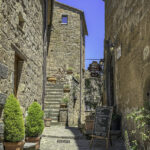
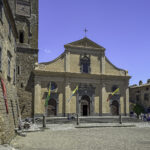
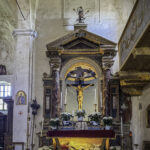
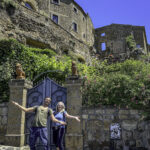
The village’s stone houses, medieval gateways, and narrow lanes preserve a remarkably intact historic core. The central square is anchored by the Church of San Donato, whose origins trace back to the 7th century. Earthquakes, erosion, and depopulation have left Civita nearly untouched by modern development, giving it an atmosphere suspended in time.
Despite its delicate condition, Civita di Bagnoregio has experienced a revival as a protected cultural site and a symbol of Italy’s endangered historic landscapes. Its breathtaking setting, ancient origins, and quiet medieval character make it one of the most evocative and visually stunning villages in central Italy. Click on thumbnail to view images


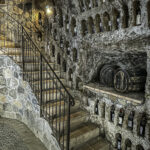
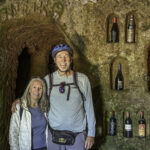



After several days exploring Orvieto and its enchanting surrounding countryside, it was time to continue our journey north by train to Milan. We were genuinely sad to leave this beautiful mountaintop town—its deep Etruscan history, dramatic setting, and unforgettable dining had made it one of the highlights of our time in Italy. As the train carried us away, we knew Orvieto’s charm would stay with us long after our travels moved on