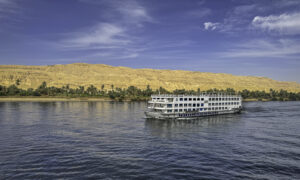
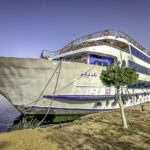
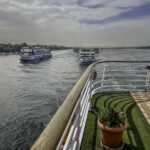
After exploring the historic treasures of Cairo and the coastal charm of Alexandria, we began the next chapter of our adventure—uncovering the mysteries of the Nile. A short flight carried us south to Luxor, the ancient heart of Upper Egypt, where millennia of pharaonic history wait along the riverbanks. It was here that we met our boat, our floating home for the days ahead, and prepared to begin our unforgettable Nile River journey, following the timeless waterway that shaped one of the world’s greatest civilizations.
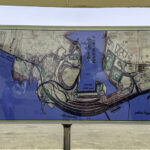
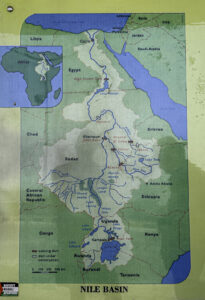
The Nile Valley from the Mediterranean Sea to Abu Simbel traces the full arc of ancient Egypt’s development, following the river that shaped its economy, religion, and political power. At the northern edge, the Nile fans into the fertile Delta, a vast agricultural plain that supported thriving towns and linked Egypt to the wider world through maritime trade with the Levant, Cyprus, and the Mediterranean basin.
Moving southward into Lower Egypt, the landscape narrows toward the region around Memphis, Egypt’s earliest capital. Here, the great pyramid fields of Giza, Saqqara, and Dahshur rise from the desert—enduring symbols of Old Kingdom engineering and the evolution of royal tombs from early step pyramids to the monumental structures that define ancient Egypt today.
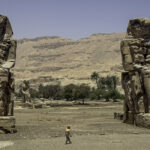
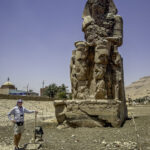
As the Nile continues through Upper Egypt, the valley becomes a long, fertile corridor lined with temple cities and royal centers. Foremost among them is Thebes (modern Luxor), the spiritual heart of ancient Egypt. The vast temple complexes of Karnak and Luxor honored the god Amun and stood at the center of religious life, while the Valley of the Kings and Valley of the Queens served as royal burial grounds for pharaohs such as Hatshepsut, Seti I, and Tutankhamun.
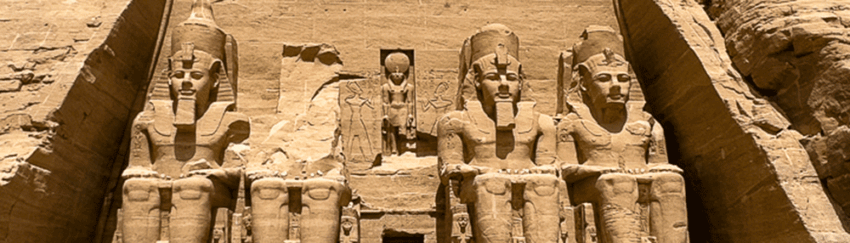
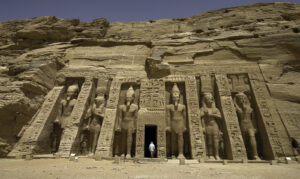
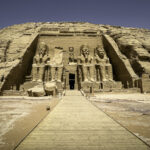
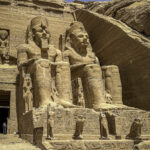
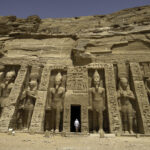
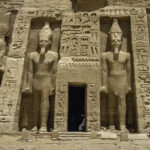
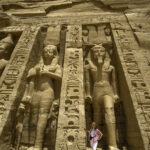
At the far southern frontier lies Abu Simbel, a monumental gateway carved into sandstone cliffs by Ramesses II in the 13th century BCE. Its colossal seated statues projected pharaonic authority over Nubia, while the nearby temple dedicated to Queen Nefertari demonstrated both artistic mastery and the political symbolism of the New Kingdom.
From the Delta to Abu Simbel, the Nile Valley reveals how this life-giving river sustained one of history’s greatest civilizations—politically, spiritually, and economically—for more than three thousand years.
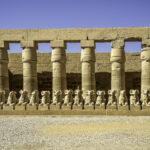
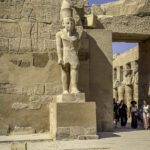
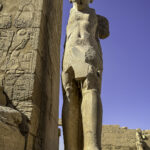
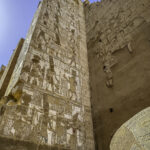
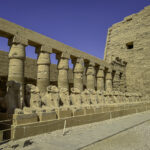
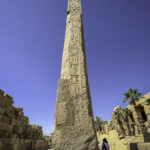
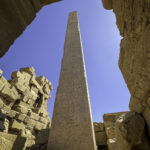
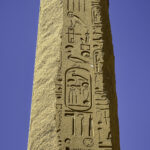
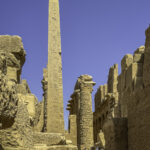
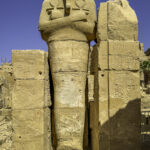
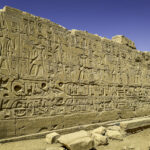
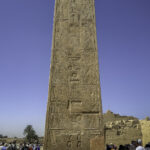
The Temple of Karnak, located on the east bank of the Nile in modern-day Luxor, is the largest religious complex of ancient Egypt and one of the most expansive temple sites in the world. Built and expanded over roughly 2,000 years—from the Middle Kingdom (around 2000 BCE) through the Ptolemaic period—it served primarily as the cult center of Amun-Ra, the chief deity of the New Kingdom. Successive pharaohs, including Hatshepsut, Thutmose III, Seti I, and Ramesses II, added massive gateways, obelisks, and intricately carved halls to honor the god and legitimize their own rule.
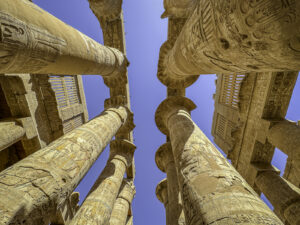
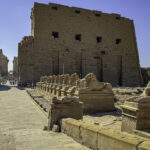
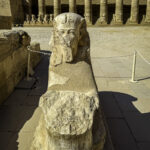
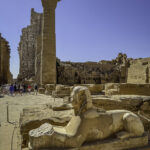
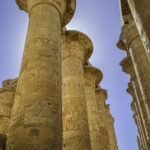
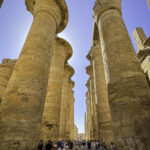
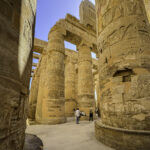
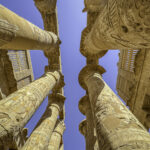
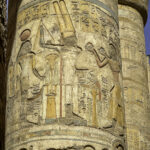
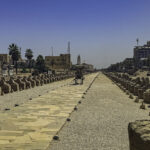
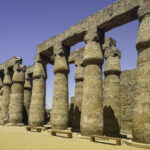
At its heart stands the Great Hypostyle Hall, a forest of 134 colossal columns rising up to 69 feet, each covered in hieroglyphic inscriptions depicting royal achievements and religious rituals. Karnak was connected to the Luxor Temple by a ceremonial avenue of sphinxes, used during the annual Opet Festival when statues of the gods were carried in procession. Today, the complex’s towering pylons, sacred lake, and sprawling ruins provide unparalleled insight into ancient Egyptian religion, architecture, and state power. Click on thumbnail to view images
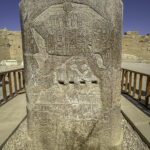
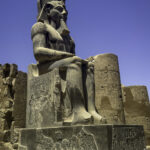
Ramesses I
134 columns
God of Fertility Aman Min
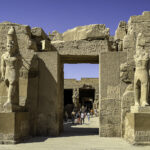
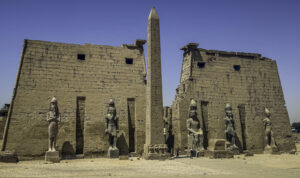
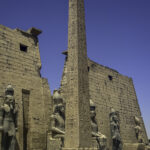
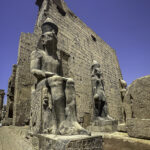
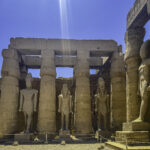
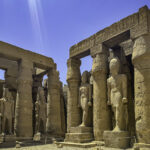
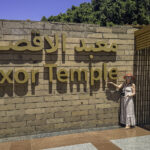
The Temple of Luxor, located in the heart of modern Luxor on the east bank of the Nile, was built primarily during the reigns of Amenhotep III (14th century BCE) and Ramesses II (13th century BCE). Unlike the vast ceremonial complex at Karnak, Luxor Temple was dedicated to the rejuvenation of kingship. Its central ritual focus was the annual Opet Festival, during which the statues of Amun-Ra, Mut, and Khonsu were transported from Karnak to Luxor to renew the divine authority of the pharaoh.
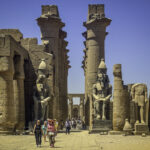
The complex is marked by its monumental entrance pylon constructed by Ramesses II, originally fronted by six colossal statues of the king and two granite obelisks—one of which now stands in Paris at the Place de la Concorde. Behind the pylon lie spacious courtyards, processional colonnades, and sanctuaries adorned with reliefs depicting royal ceremonies and military triumphs. Later additions by Tutankhamun, Horemheb, Alexander the Great, and Roman emperors show how the temple remained an active sacred site for over a millennium. Today, Luxor Temple stands as a striking blend of pharaonic, Greek, and Roman architectural layers, illuminating the enduring religious and political life of ancient Egypt. Click on thumbnail to view images
6000 sphinx in 3 km
19 statues in Luxor Temple
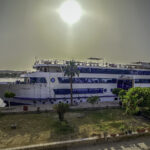
The boat bedroom
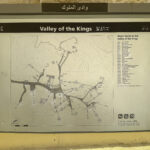
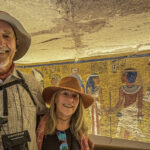
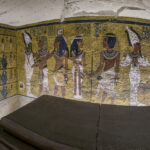
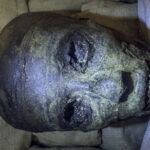
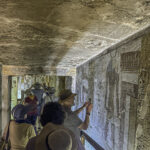
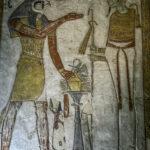
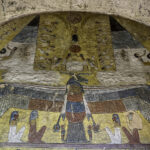
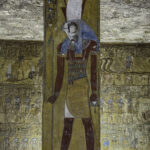
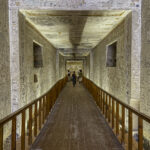
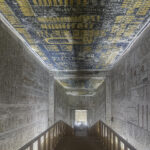
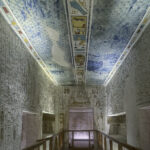
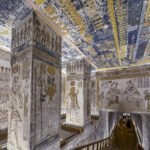
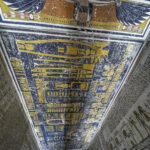
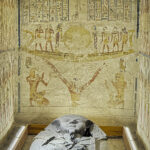
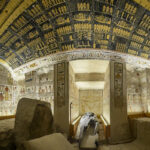
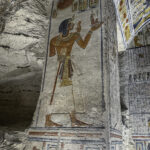
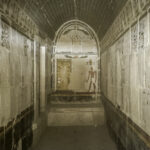
The Valley of the Kings, located on the west bank of the Nile across from Luxor, served as the principal royal necropolis for the pharaohs of the New Kingdom (circa 1550–1070 BCE). Hidden among barren limestone cliffs, the valley was chosen for its natural seclusion and symbolic association with rebirth in the afterlife. More than 60 tombs were carved deep into the hillsides, each designed to protect the king’s mummified body and the treasures believed necessary for eternal life.
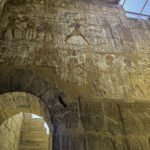
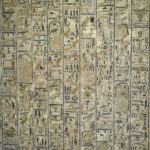
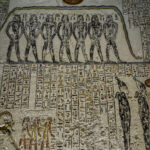
Pharaohs such as Thutmose III, Seti I, Ramesses II, and Tutankhamun were buried here in elaborately decorated chambers. The tomb walls are covered with detailed scenes from funerary texts—including the Book of the Dead and the Amduat—meant to guide the king through the underworld. Although most tombs were plundered in antiquity, the 1922 discovery of Tutankhamun’s nearly intact tomb by Howard Carter revealed the splendor these burials once held. Today, the Valley of the Kings is a UNESCO World Heritage Site and remains a focal point of archaeological study, offering profound insight into ancient Egyptian beliefs about death, resurrection, and divine kingship. Click on thumbnail to view images
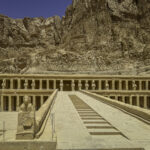
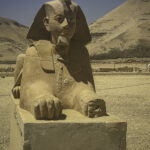
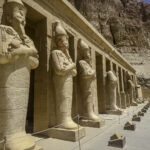
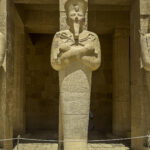
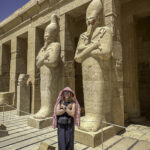
The Temple of Hatshepsut, also known as Deir el-Bahri, is a terraced mortuary temple built into the cliffs on the west bank of the Nile near modern Luxor. Commissioned by Queen Hatshepsut—one of ancient Egypt’s few female pharaohs—it was constructed during the 15th century BCE under the direction of her architect Senenmut. The temple served as a monument to her reign and as a ceremonial site for the cult of Amun, emphasizing her divine birth and legitimacy as ruler.
The design of the temple is unique in Egyptian architecture: three broad, colonnaded terraces rise toward the cliff face, connected by ramps and harmonizing with the natural rock amphitheater behind them. Painted reliefs throughout the complex depict key events of Hatshepsut’s reign, including her famed expedition to the trading land of Punt, scenes of ritual offerings, and her portrayal as both king and divine daughter of Amun. Later pharaohs, particularly Thutmose III, attempted to erase her legacy, but the temple’s grandeur survived. Today, it remains one of the finest examples of New Kingdom architectural innovation and royal propaganda. Click on thumbnail to view images
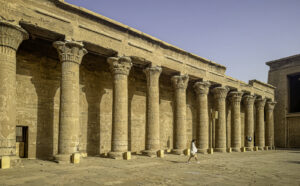
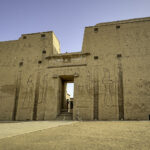
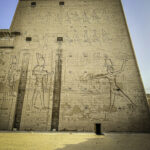
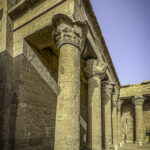
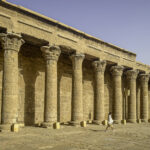
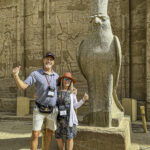
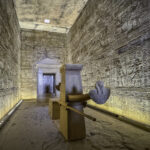
The Temple of Edfu, located on the west bank of the Nile between Luxor and Aswan, is one of the best-preserved ancient temples in Egypt. Built during the Ptolemaic period between 237 and 57 BCE, it is dedicated to the falcon-headed god Horus, who was believed to have defeated his uncle Seth in this sacred location. The temple’s inscriptions and reliefs provide one of the most complete records of ancient Egyptian myth, ritual, and daily temple life.
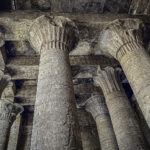
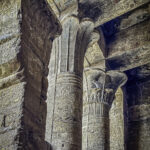
Approached through a towering 36-meter-high pylon decorated with dramatic battle scenes, the temple complex includes a vast courtyard, hypostyle halls, and inner sanctuaries arranged along a traditional axial plan. Detailed reliefs depict religious festivals, offerings, cosmic creation myths, and the legendary conflict between Horus and Seth, allowing modern scholars to reconstruct lost aspects of Egyptian theology.
Because the temple was buried in sand and mud for centuries, it remained exceptionally intact, preserving its original walls, ceilings, and carvings. Today, the Temple of Edfu stands as a striking example of late Egyptian temple architecture and a key site for understanding the religious life of ancient Egypt. Click on thumbnail to view images
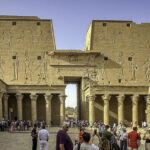
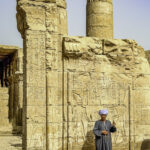
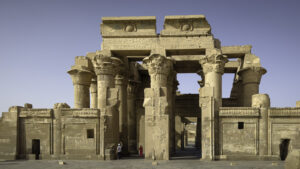
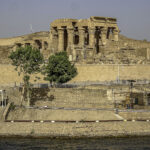
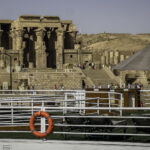
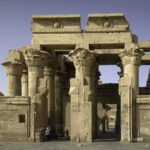
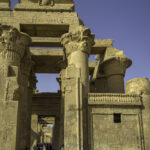
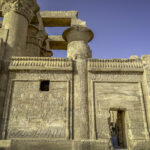
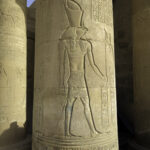
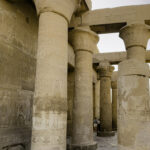
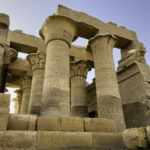
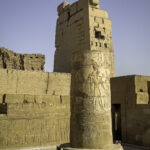
The Temple of Kom Ombo, located on a bend of the Nile between Edfu and Aswan, is unique among Egypt’s ancient temples for its perfectly symmetrical, dual design. Built during the Ptolemaic period (2nd–1st century BCE) and later expanded by the Romans, the temple is dedicated to two distinct deities: Sobek, the crocodile god associated with fertility and the Nile, and Horus the Elder, a sky and healing god. Each half of the temple features its own entrances, halls, and sanctuaries, mirroring one another along a central axis.
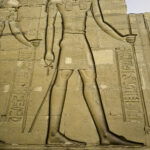
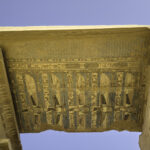
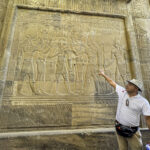
The reliefs carved throughout the complex depict rituals, offerings, and medical scenes—including one of the earliest known representations of surgical instruments. Nearby, the Crocodile Museum displays mummified crocodiles discovered in the area, reflecting Kom Ombo’s ancient association with Sobek’s cult.
Partially damaged by ancient floods and later by earthquakes, the temple still retains much of its original beauty and symmetry. Today, Kom Ombo offers insight into the diversity of Egyptian religious belief and the architectural creativity of the Ptolemaic era. Click on thumbnail to view images
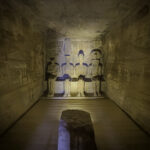
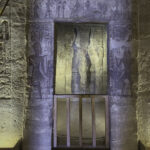
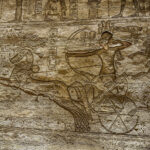
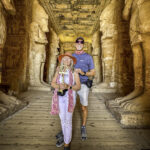
The Temples of Abu Simbel, carved into a sandstone cliff on the west bank of the Nile near Egypt’s southern border, are among the greatest monuments of the reign of Pharaoh Ramesses II. Built in the 13th century BCE, the larger temple is dedicated to Ramesses himself and the gods Amun-Ra, Ra-Horakhty, and Ptah. Its façade is dominated by four colossal seated statues of the pharaoh, each rising over 20 meters high, projecting his power to all who approached Egypt from Nubia.
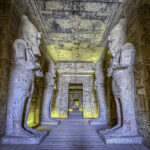
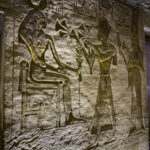
Inside, a series of pillared halls leads to the sanctuary, where the rays of the rising sun illuminate statues of the gods on two specific days each year—an architectural achievement that testifies to the builders’ astronomical skill. Nearby stands the smaller temple dedicated to Queen Nefertari, Ramesses’ beloved consort, in which she is depicted nearly equal in size to the king—an exceptional honor in Egyptian art.
In the 1960s, the temples became the centerpiece of a dramatic international rescue effort when the rising waters of the Aswan High Dam threatened to submerge them. In an unprecedented feat of engineering, the temples were cut into massive blocks and reassembled on higher ground. Today, Abu Simbel stands not only as a monument of ancient grandeur but also as a symbol of global cooperation to preserve humanity’s heritage. Click on thumbnail to view images
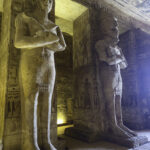
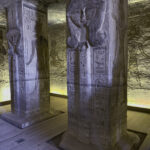
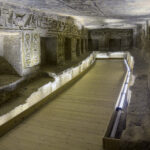
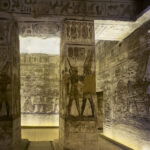
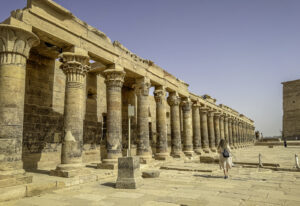
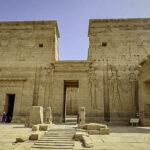
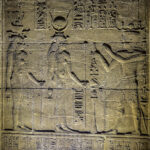
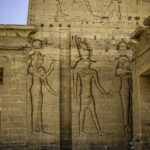
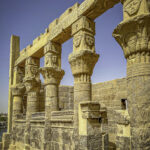
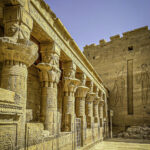
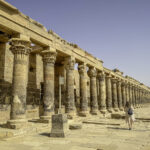
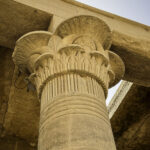
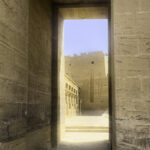
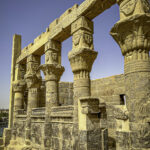
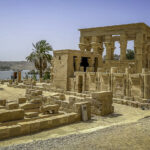
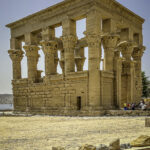
The Temple of Philae, dedicated primarily to the goddess Isis, was one of the last great sanctuaries of ancient Egyptian religion. Originally located on Philae Island near Aswan, the temple complex was begun during the Ptolemaic period (3rd–1st century BCE) and continued under Roman emperors, making it one of Egypt’s final active temples before the rise of Christianity.
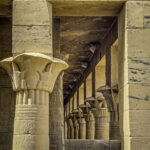
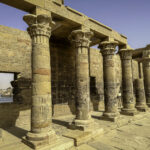
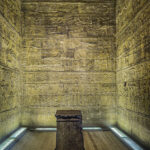
The island setting gave Philae a legendary reputation as the “Pearl of Egypt,” with colonnades, courtyards, and shrines rising directly from the water. Reliefs throughout the complex depict the story of Isis, Osiris, and Horus, along with scenes of Roman emperors making offerings in traditional Egyptian style—evidence of the cult’s enduring importance.
When the construction of the Aswan High Dam threatened to submerge Philae, an international UNESCO-led effort moved the entire complex stone by stone to nearby Agilkia Island between 1972 and 1980. There, the temple was reconstructed with great accuracy, preserving its alignment and island atmosphere.
Today, the Temple of Philae is admired for its graceful architecture, luminous reliefs, and dramatic rescue—standing as one of the most beautiful and evocative monuments in southern Egypt. Click on thumbnail to view images
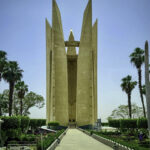
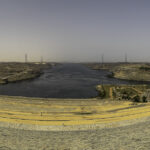
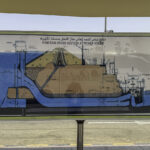
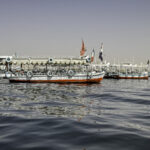
The Aswan High Dam, completed in 1970 across the Nile River in southern Egypt, is one of the largest and most significant engineering projects in the modern Middle East. Built with Soviet assistance during the presidency of Gamal Abdel Nasser, the dam was designed to control the Nile’s annual floods, increase agricultural productivity, and generate large amounts of hydroelectric power for Egypt’s growing population.
The project created Lake Nasser, one of the world’s largest artificial lakes, stretching over 300 miles into southern Egypt and northern Sudan. While the dam brought major benefits—such as irrigation stability, expanded farmland, and a reliable power supply—it also required enormous cultural and environmental sacrifices. Entire Nubian communities were relocated, and several ancient monuments, including the temples of Abu Simbel and Philae, had to be dismantled and moved to higher ground in dramatic international rescue efforts led by UNESCO.
Today, the Aswan High Dam remains a symbol of Egypt’s modern development and its long effort to harness the power of the Nile, shaping both the landscape and the economy of the region. Click on thumbnail to view images
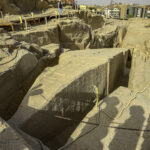
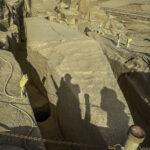
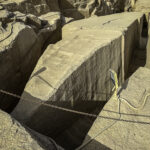
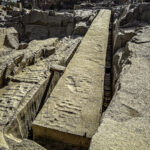
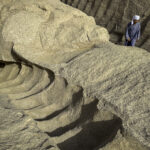
The Unfinished Obelisk, located in the ancient granite quarries of Aswan, is one of Egypt’s most revealing archaeological sites. Commissioned during the reign of Queen Hatshepsut in the 15th century BCE, it was intended to be the largest obelisk ever carved, measuring an estimated 42 meters (about 137 feet) in height and weighing over 1,000 tons.
Still lying in the bedrock, the obelisk offers a rare, firsthand glimpse into ancient stone-working techniques. Tool marks, trenches, and channels show how artisans shaped monolithic granite blocks using dolerite pounding stones. The project was abandoned when a large crack appeared in the stone’s body—rendering the obelisk unusable and leaving it permanently attached to the quarry floor.
Today, the Unfinished Obelisk serves as an open-air museum that illustrates both the skill and the challenges of ancient Egyptian engineering. It remains one of the most striking examples of a monumental work frozen mid-creation. Click on thumbnail to view images
After exploring the timeless wonders of the Nile—its temples, tombs, and river landscapes—we returned to Cairo for our final night together as a group. It was a time to reflect on all we had experienced and to say goodbye to our wonderful guide, Mohamed, whose knowledge, kindness, and humor had brought Egypt’s history vividly to life. His presence made the journey unforgettable.
The next morning, we made our way to the airport and boarded a flight to Naples, Italy, ready to begin the next phase of our adventure. With Egypt’s ancient world still fresh in our minds, we looked forward to the discoveries awaiting us across Europe—new cultures, new landscapes, and new memories to be made.
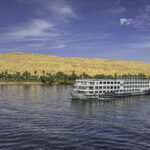
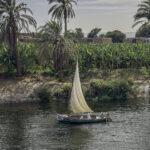
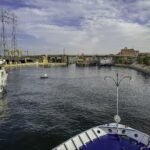
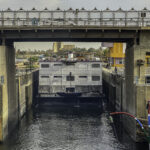
Composite video of the entire journey along the Nile River from Luxor to Aswan

 After exploring the historic treasures of Cairo and the coastal charm of Alexandria, we began the next chapter of our adventure—uncovering the mysteries of the Nile. A short flight carried us south to
  As the Nile continues through Upper Egypt, the valley becomes a long, fertile corridor lined with temple cities and royal centers. Foremost among them is Thebes (modern Luxor), the spiritual heart of ancient Egypt. The vast temple complexes of Karnak and Luxor honored the god Amun and stood at the center of religious life, while the Valley of the Kings and Valley of the Queens served as royal burial grounds for pharaohs such as Hatshepsut, Seti I, and Tutankhamun.
 sites in the world. Built and expanded over roughly 2,000 years—from the Middle Kingdom (around 2000 BCE) through the Ptolemaic period—it served primarily as the cult center of Amun-Ra, the chief deity of the New Kingdom. Successive pharaohs, including Hatshepsut, Thutmose III, Seti I, and Ramesses II, added massive gateways, obelisks, and intricately carved halls to honor the god and legitimize their own rule.
 Ramesses II (13th century BCE). Unlike the vast ceremonial complex at Karnak, Luxor Temple was dedicated to the rejuvenation of kingship. Its central ritual focus was the annual Opet Festival, during which the statues of Amun-Ra, Mut, and Khonsu were transported from Karnak to Luxor to renew the divine authority of the pharaoh.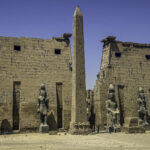





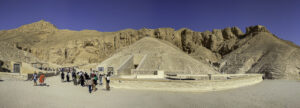 1550–1070 BCE). Hidden among barren limestone cliffs, the valley was chosen for its natural seclusion and symbolic association with rebirth in the afterlife. More than 60 tombs were carved deep into the hillsides, each designed to protect the king’s mummified body and the treasures believed necessary for eternal life.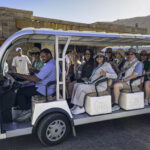

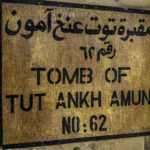



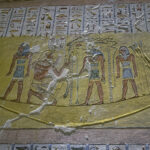
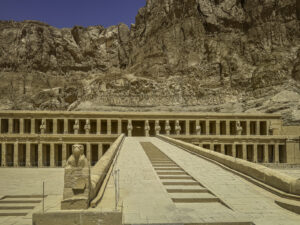 Commissioned by Queen Hatshepsut—one of ancient Egypt’s few female pharaohs—it was constructed during the 15th century BCE under the direction of her architect Senenmut. The temple served as a monument to her reign and as a ceremonial site for the cult of Amun, emphasizing her divine birth and legitimacy as ruler.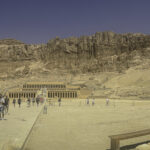









 period between 237 and 57 BCE, it is dedicated to the falcon-headed god


 design. Built during the Ptolemaic period (2nd–1st century BCE) and later expanded by the Romans, the temple is dedicated to two distinct deities:













 temples before the rise of Christianity.

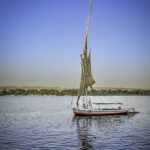

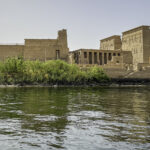
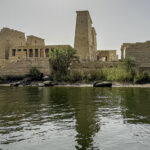
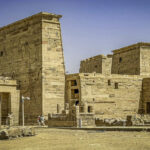


 East. Built with Soviet assistance during the presidency of Gamal Abdel Nasser, the dam was designed to control the Nile’s annual floods, increase agricultural productivity, and generate large amounts of hydroelectric power for Egypt’s growing population.