
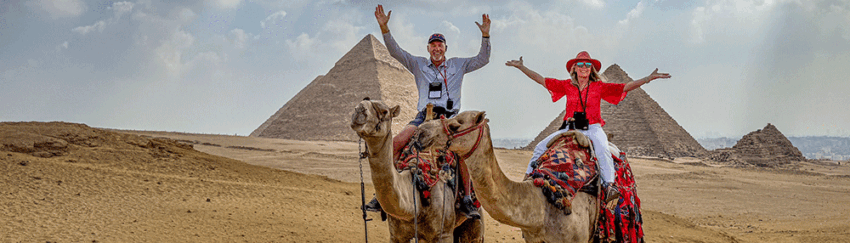
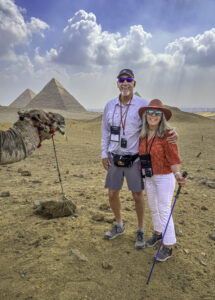
Our summer of adventure began with a Road Scholar “Beyond the Pharaohs: Egypt Past and Present” 14-day tour—an unforgettable journey into one of the world’s oldest civilizations. We landed in Cairo, a city alive with history and modern energy, where we met our guide, Mohamed, whose knowledge and warmth immediately set the tone for the trip. There, in the arrivals hall, we also met the other participants who would share this remarkable experience with us.
This was the starting point for a journey that would take us from ancient temples and desert landscapes to bustling markets and historic cities, marking the beginning of a summer filled with discovery, friendship, and exploration.
Cairo Area
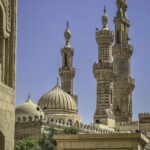
Cairo, the vast capital of Egypt, is a city where thousands of years of history blend seamlessly with the energy of the modern Middle East. Its roots stretch back to ancient settlements along the Nile, and while the nearby pyramids of Giza belong to the age of the pharaohs, the city itself rose to prominence in the Islamic medieval era. Founded in 969 CE by the Fatimid dynasty, Cairo quickly became a center of political power, scholarship, and trade, earning the title “The City of a Thousand Minarets.” Its historic core, with landmarks such as the Al-Azhar Mosque, Sultan Hassan Mosque, and the Citadel, reflects centuries of Islamic art and architecture.
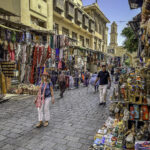
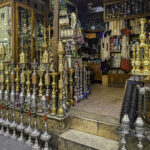
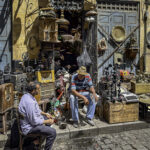
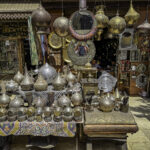
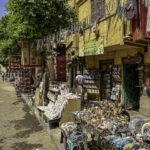
Throughout the medieval and Ottoman periods, Cairo flourished as a crossroads of caravan routes, marketplaces, and intellectual life. The bustling streets of Khan el-Khalili, one of the world’s oldest continuously operating bazaars, preserve the atmosphere of this trading heritage.
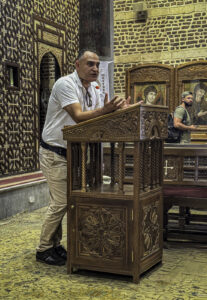 In the modern era, Cairo expanded into a sprawling metropolis, blending colonial-era boulevards and 19th-century architecture with contemporary neighborhoods and rapid urban growth. Today, it stands as the cultural, political, and economic heart of Egypt—a city of museums, universities, and vibrant street life, where ancient traditions coexist with modern development. From the historic mosques and medieval gates to the busy riverfront and skyline of new Cairo, the city remains a dynamic reflection of Egypt’s enduring past and evolving present.
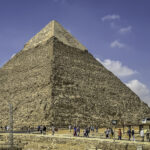
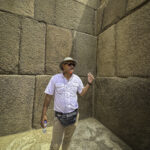
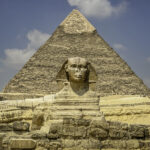
The Great Pyramids of Giza—Khufu, Khafre, and Menkaure—were constructed during Egypt’s Old Kingdom, around 2600–2500 BCE, as monumental royal tombs. The largest, the Pyramid of Khufu, originally rose to 481 feet and remains one of the oldest and most precisely engineered structures in the world. Built from millions of limestone blocks, the pyramids reflect advanced knowledge of mathematics, astronomy, and labor organization. They formed the core of a vast funerary landscape that included mortuary temples, subsidiary pyramids, boat pits, and causeways connecting the plateau to the Nile Valley.
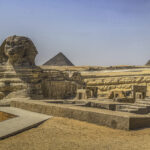
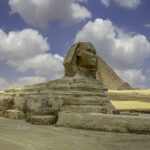
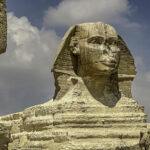
At the foot of the plateau lies the Great Sphinx, a colossal limestone statue with the body of a lion and a human face—commonly believed to represent Pharaoh Khafre. Carved from a single outcrop of bedrock, the Sphinx is the oldest known monumental sculpture in Egypt. It likely served as a guardian of the necropolis and symbol of royal power, blending solar and royal imagery. Over the centuries, the monument became buried in sand, requiring repeated excavations, including major clearings in the 19th and 20th centuries. Today, the pyramids and the Sphinx stand as enduring icons of ancient Egypt’s engineering skill, religious beliefs, and centralized state power. Click on thumbnail to view images







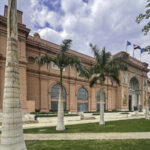
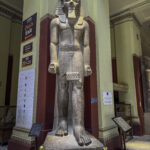
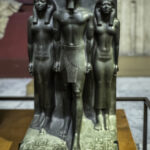
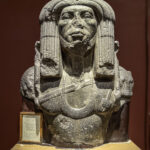
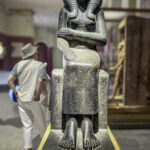
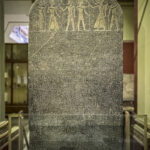
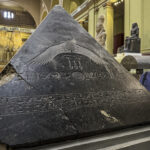
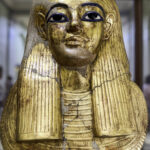
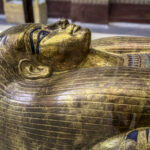
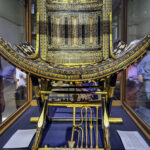
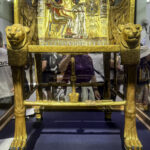
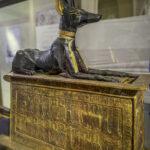
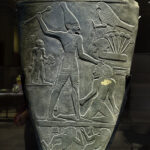
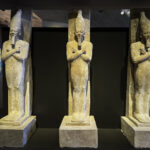
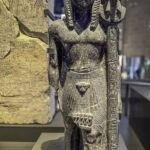
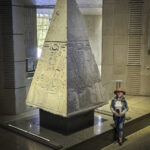
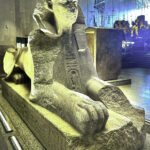
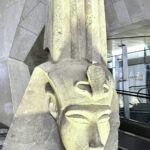
The Egyptian Museum in Cairo, often called the Old Museum or Tahrir Museum, is one of the world’s most significant repositories of ancient Egyptian antiquities. Opened in 1902 and designed by French architect Marcel Dourgnon, it was the first purpose-built museum in the Middle East and quickly became the centerpiece of 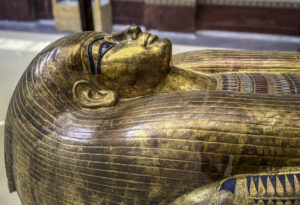 Egypt’s archaeological heritage. Located on Tahrir Square, its pink neoclassical façade has witnessed more than a century of excavations, discoveries, and political change.
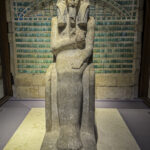
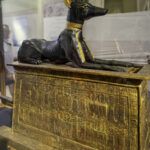
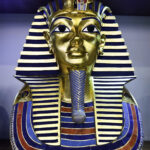
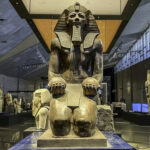
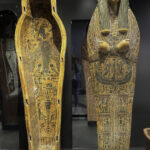
The museum houses over 120,000 artifacts, spanning from the Predynastic Period to the Greco-Roman era. Its most famous collections include the treasures of Tutankhamun, monumental statues from the Old and Middle Kingdoms, royal mummies, and countless everyday objects that illuminate ancient life. For decades, its galleries—often densely packed—offered an unmatched, immersive view of Egypt’s past.
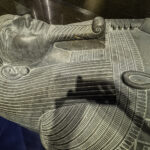
Though many headline artifacts are now being transferred to the new Grand Egyptian Museum near Giza, the old Egyptian Museum remains an active, historic institution. Its atmospheric halls and original displays preserve the early spirit of Egyptology and continue to attract visitors drawn to the legacy of more than 5,000 years of civilization. Click on thumbnail to view images
The Dahshur and Saqqarah pyramid complexes, located south of modern Cairo, mark the earliest and most transformative phases in ancient Egypt’s pyramid-building tradition. Together, they illustrate the architectural evolution from simple mudbrick mastabas to fully realized stone pyramids that would culminate at Giza.
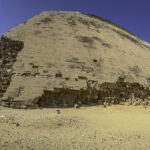
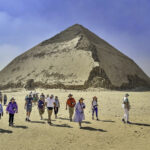
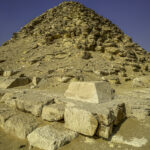
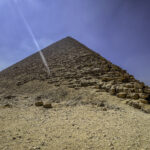
 At Dahshur, Pharaoh Sneferu (c. 2600 BCE) oversaw experiments that shaped the future of Egyptian monumental architecture. His Bent Pyramid, with its shift in angle midway up, reveals challenges engineers faced as they attempted to convert the stepped form into a smooth-sided structure. Nearby, Sneferu’s Red Pyramid became Egypt’s first successful true pyramid with perfectly straight sides—an accomplishment that set the template for later royal tombs. Dahshur also served as a necropolis during the Middle Kingdom, with rulers such as Senusret III and Amenemhat II adding their own pyramids.
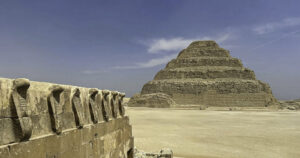
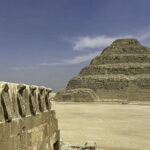
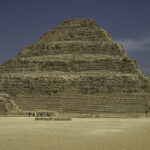
Just north lies Saqqarah, the vast burial ground for ancient Memphis and home to Egypt’s earliest large-scale stone monument, the Step Pyramid of Djoser. Designed by the architect Imhotep in the 27th century BCE, Djoser’s pyramid transformed the traditional mastaba into a stacked, six-tiered structure, laying the foundation for all subsequent pyramid design. Saqqarah remained active for more than three millennia, featuring Old Kingdom mastabas, richly decorated New Kingdom tombs, and the Serapeum, where the sacred Apis bulls were interred.
Together, Dahshur and Saqqarah preserve the story of Egypt’s greatest architectural innovation—from the first experiments in stone construction to the perfected pyramid form that defined royal power for centuries. Click on thumbnail to view images
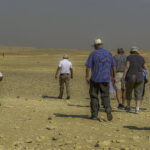
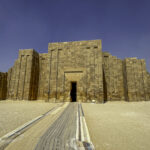
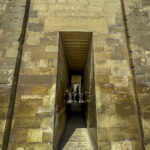
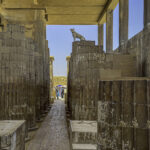
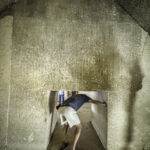
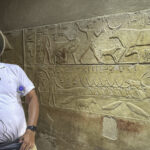
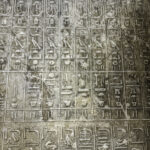
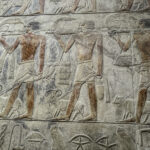
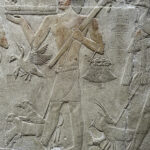
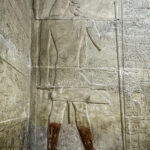
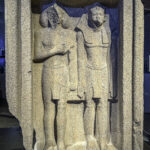
The Imhotep Museum, located at the entrance to the Saqqarah archaeological zone, is a modern museum dedicated to Imhotep, the architect of Pharaoh Djoser’s Step Pyramid and one of the earliest known engineers in history. Opened in 2006, the museum showcases discoveries from Saqqarah’s cemeteries and temples, highlighting the development of early stone architecture and the long history of the necropolis.
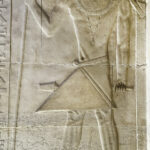
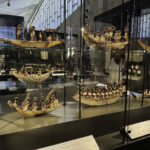
The exhibits include artifacts from Old Kingdom mastabas, carved limestone reliefs, wooden statuary, tools used by ancient builders, and objects unearthed during recent excavations. A full reconstructed burial chamber and displays devoted to the Step Pyramid project help explain Imhotep’s revolutionary role in transforming Egypt’s architecture. The museum also honors generations of archaeologists—Egyptian and international—whose work at Saqqarah continues to reveal new insights into the country’s ancient past. Click on thumbnail to view images
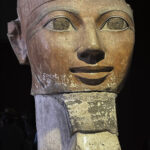
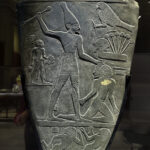
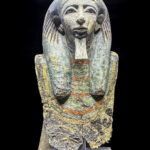
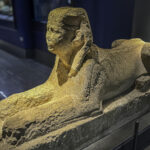
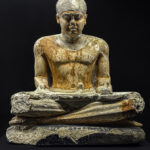
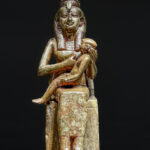
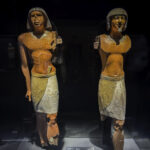


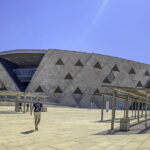
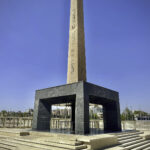
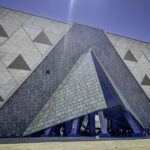
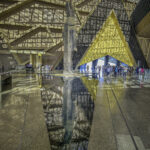
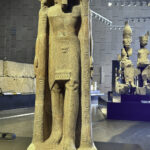
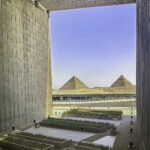
The Grand Egyptian Museum (GEM), located just outside Cairo near the Giza Pyramids, is the newest and largest museum in the world dedicated to a single ancient 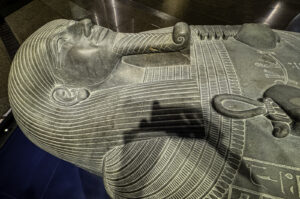 civilization. Conceived in the 1990s and built over two decades, the museum represents Egypt’s most ambitious cultural project. Its modern, angular design—created by Heneghan Peng Architects—aligns visually with the pyramids and features expansive glass and alabaster walls that echo the geometry of the desert landscape.
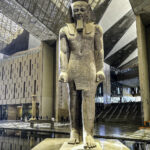
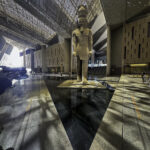
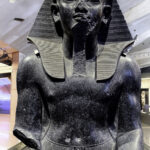
Inside, the museum houses more than 100,000 artifacts, including the full treasure collection of Tutankhamun displayed together for the first time. Visitors enter through a vast atrium dominated by the colossal statue of Ramesses II, leading to galleries arranged chronologically from the earliest dynasties to the Greco-Roman period. Conservation labs, educational spaces, and panoramic views of the Giza Plateau make the museum both a world-class research center and a major visitor attraction.
Designed to complement rather than replace Cairo’s historic Tahrir Museum, the Grand Egyptian Museum serves as Egypt’s new cultural flagship, presenting the story of ancient Egypt on a scale unmatched anywhere in the world. Click on thumbnail to view images

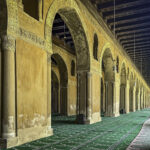
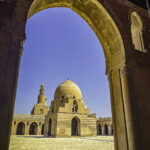
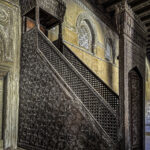
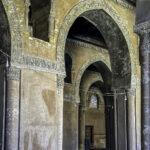
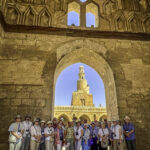
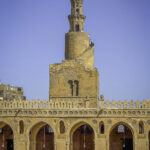
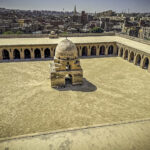
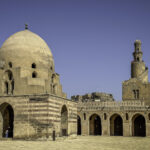
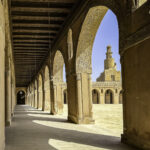
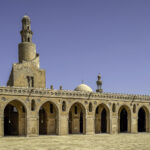
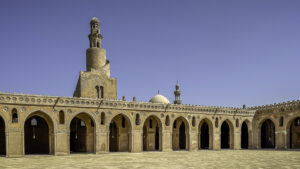 of the Tulunid dynasty, it reflects the architectural style of the Abbasid period and was inspired by the great mosques of Samarra in Iraq. Built entirely of brick and plaster, the mosque was designed to accommodate large congregations and remains remarkable for its simplicity, harmony, and vast open courtyard.
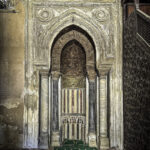
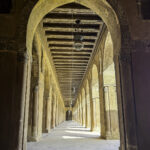
Its most distinctive feature is the spiral minaret, which ascends in an external, ramp-like staircase—an uncommon form in Islamic architecture and a clear echo of Samarra’s famous minaret. The mosque’s covered halls are supported by pointed arches and decorated with finely carved stucco panels featuring geometric and floral motifs. Because it has never been completely rebuilt, the Mosque of Ibn Tulun preserves much of its original 9th-century character.
Today, it stands as a rare example of early Islamic architecture in Egypt, offering visitors a quiet, atmospheric window into Cairo’s medieval past. Click on thumbnail to view images
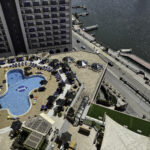
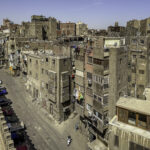
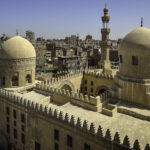
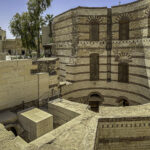
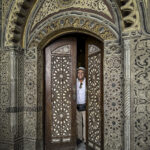
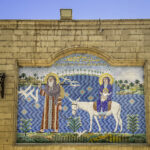
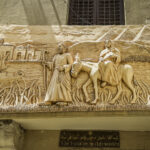
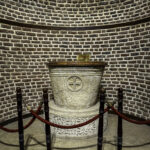
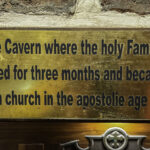
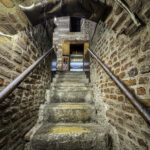
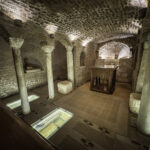
Misr al-Qadima, or Old Cairo, is one of the oldest continuously inhabited districts in the city and a focal point of early Christian, Jewish, and Islamic heritage. Built 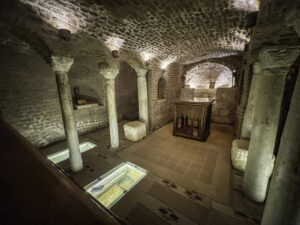 over the site of the ancient Roman fortress of Babylon, the area contains some of Egypt’s earliest churches, a historic synagogue, and early Islamic monuments. Its narrow lanes and archaeological layers preserve the multicultural character of Cairo’s earliest centuries, when Coptic Christians, early Muslims, and Jewish communities lived in close proximity.
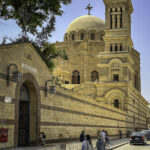
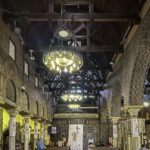
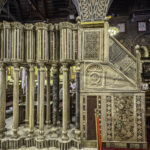
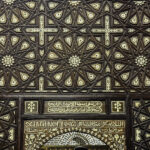
At the heart of this district stands the Hanging Church (Al-Muallaqa), one of the oldest and most important Coptic churches in Egypt. Dating to the 7th–9th centuries CE, it is called “hanging” because its nave was constructed above a Roman gatehouse, giving the impression of the church suspended over the passageway. The interior features intricately carved wooden screens, icons from the medieval and Ottoman periods, and a distinctive wooden ceiling shaped like the hull of a ship.
Long a seat of the Coptic Patriarchate, the Hanging Church remains an active place of worship and a symbol of Egypt’s deep Christian heritage. Together, Misr al-Qadima and the Hanging Church offer a vivid look into the ancient religious traditions that shaped Cairo’s identity. Click on thumbnail to view images







Alexandria Area
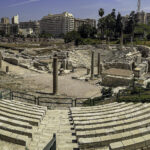
 Alexandria, stretching along the Mediterranean coast, has been one of the most storied cities of the ancient world since its founding in 331 BCE by Alexander the Great. Intended as a beacon of Greek culture in Egypt, it soon became the intellectual capital of the Hellenistic world. The legendary Library of Alexandria and the Mouseion attracted scholars, scientists, and philosophers from across the Mediterranean, while the towering Pharos Lighthouse, one of the Seven Wonders of the Ancient World, guided ships into its bustling harbor.
Through the Roman and Byzantine eras, Alexandria remained a vital center of trade, learning, and early Christianity. Although many ancient structures have been lost to time, the city’s layered history still echoes through its catacombs, Roman theater, and surviving cultural traditions.
In the modern era, Alexandria evolved into a cosmopolitan port city, shaped by Greek, Italian, Levantine, and Egyptian influences. Its 19th- and early 20th-century boulevards, European-style cafés, and multicultural neighborhoods gave it a distinctive Mediterranean character. Today, landmarks such as the modern Bibliotheca Alexandrina, the Qaitbay Citadel, and the bustling Corniche reflect both its ancient legacy and its contemporary life as Egypt’s gateway to the Mediterranean.
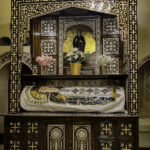
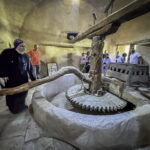
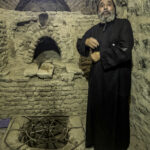
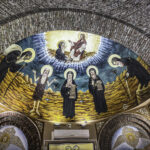
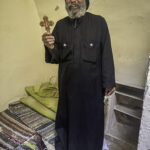
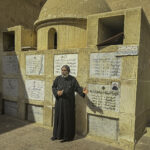
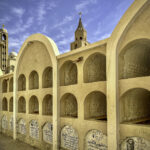
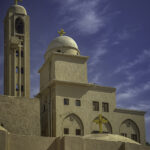
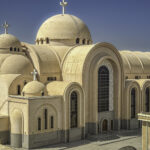
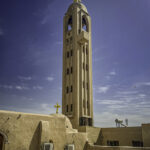
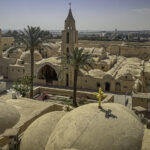
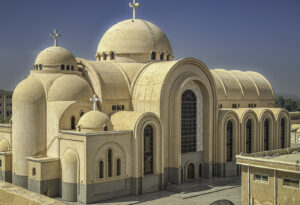 The Monastery of Saint Bishoy, located in the Wadi El Natrun region of Egypt’s Western Desert, is one of the oldest and most important monasteries in the Coptic Orthodox Church. Founded in the 4th century CE by Saint Bishoy, a revered Desert Father known for his humility and asceticism, the monastery became a major center of early Christian monastic life.
Over the centuries, it expanded into a fortified complex containing several ancient churches, monk cells, defensive towers, and a rich collection of manuscripts. The Church of Saint Bishoy, built over the saint’s tomb, is the spiritual heart of the monastery and houses beautifully preserved icons and frescoes. Tradition holds that Saint Bishoy was visited by Christ and carried Him on his shoulder—one reason he is deeply venerated in Egyptian Christianity.
Still active today, the monastery is a place of pilgrimage and worship. It remains a living testament to the endurance of Coptic monasticism, offering visitors insight into the quiet devotion, history, and traditions that shaped Christian life in the Egyptian desert. Click on thumbnail to view images

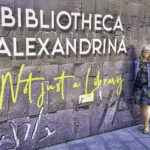
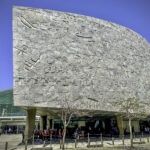
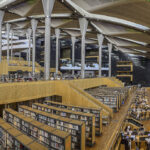
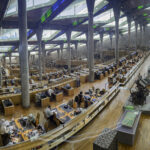
The Bibliotheca Alexandrina, opened in 2002 on Alexandria’s Mediterranean waterfront, was built as a modern revival of the ancient Library of Alexandria—the most 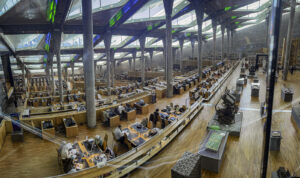 celebrated center of learning in the classical world. Designed by the Norwegian firm Snøhetta, the building’s distinctive sun-disc shape and slanted granite façade evoke a rising sun, symbolizing knowledge emerging from the sea. Its vast circular reading room, one of the largest in the world, cascades downward in tiers beneath a glass roof that floods the space with natural light.
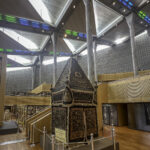
The complex houses millions of books, specialized research centers, manuscript collections, art galleries, and museums, including a Manuscript Museum and an Antiquities Museum. Its outer walls are inscribed with letters from dozens of alphabets, underscoring its mission as a global hub of scholarship and cultural exchange.
Today, the Bibliotheca Alexandrina stands as both a tribute to the intellectual legacy of ancient Alexandria and a vibrant, modern institution dedicated to education, science, and the arts. Click on thumbnail to view images
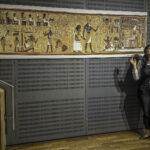
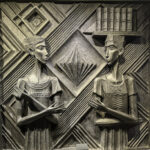
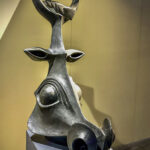
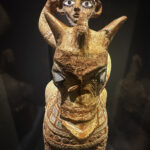
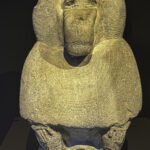
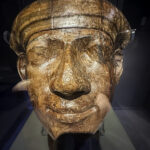
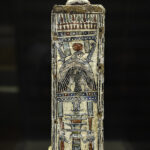
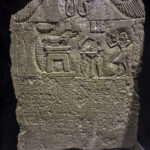



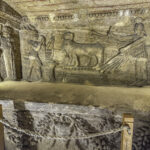
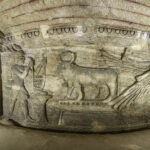
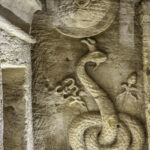
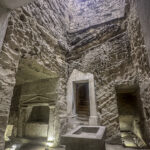
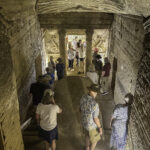
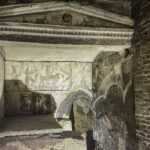
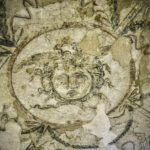
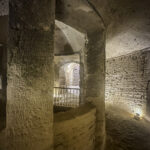
The Catacombs of Kom el-Shoqafa, located in Alexandria, are one of the most remarkable examples of Greco-Roman funerary architecture in Egypt. Dating to the 2nd 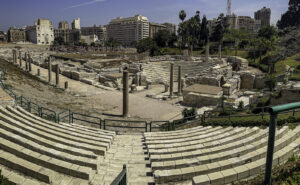 century CE, the complex was originally created as a private family tomb but expanded over time into a multi-level underground necropolis. Discovered by accident in 1900, the catacombs reveal a unique blend of Egyptian, Greek, and Roman artistic traditions.
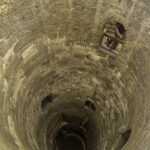
Visitors descend a spiral staircase into chambers carved from solid rock, where wall reliefs display an unusual fusion of styles—Roman banquet scenes appear alongside Egyptian deities depicted with Hellenistic features. The Hall of Caracalla, which may contain the remains of soldiers massacred during the reign of Emperor Caracalla, adds to the site’s historical mystery.
As one of the largest Roman-era burial sites in Egypt, the Catacombs of Kom el-Shoqafa offer a vivid glimpse into Alexandria’s diverse ancient population and the cultural blending that defined the city during the Roman period. Click on thumbnail to view images
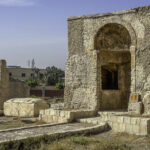
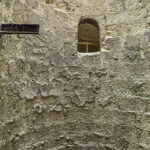
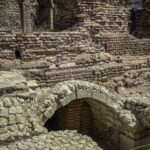
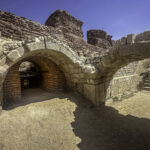
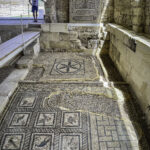
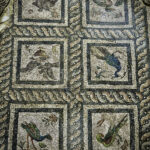

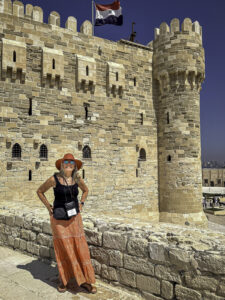
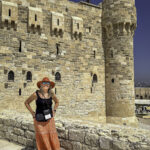
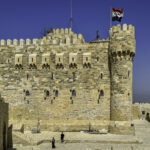
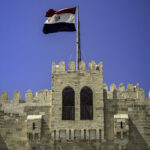
The Qaitbay Citadel, standing at the entrance to Alexandria’s Eastern Harbor, is one of Egypt’s most iconic medieval fortresses. Built in 1477 CE by the Mamluk Sultan 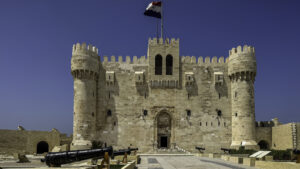 Al-Ashraf Qaitbay, it was constructed on the exact site of the ancient Lighthouse of Pharos, once one of the Seven Wonders of the Ancient World. Stones from the fallen lighthouse were likely incorporated into the citadel’s thick walls.
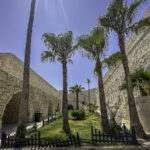
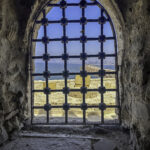
Designed to defend Egypt’s Mediterranean coastline against Ottoman naval threats, the fortress features solid limestone ramparts, corner towers, and a central keep overlooking the sea. Inside, its chambers and courtyards reflect classic Mamluk military architecture, with defensive positions arranged to withstand cannon fire and maritime attack.
Throughout its history, the citadel was restored and reused by later rulers—including the Ottomans and Muhammad Ali’s dynasty—ensuring its survival into the modern era. Today, Qaitbay Citadel offers sweeping views of the Mediterranean and stands as a powerful symbol of Alexandria’s layered past, linking its ancient, medieval, and modern histories along the waterfront. Click on thumbnail to view images

Composite video of the Ancient Egyptian Treasures around Cairo and Alexanderia