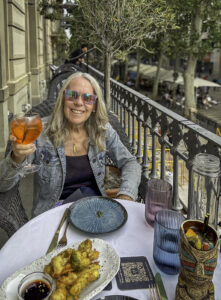
 After a smooth flight from Milan, we arrived in
 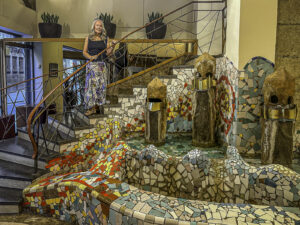 In the 19th and early 20th centuries, Barcelona underwent a major transformation, becoming the heart of the Modernista movement, a Catalan interpretation of Art Nouveau. No figure shaped the city more than Antoni Gaudí, whose imaginative architectural language reshaped Barcelona’s identity. His masterpieces—such as La Sagrada Família, Park Güell, Casa Milà, and Casa Batlló—combine bold geometry, vibrant mosaics, and organic forms inspired by nature. These monumental works made Barcelona one of the most visually distinctive cities in the world.
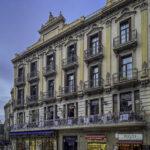
The city’s urban life flows outward from the bustling La Rambla, connecting the medieval heart with the waterfront. Here, Barcelona opens to the Mediterranean with beaches, promenades, and the regenerated Port Vell area, blending maritime heritage with contemporary culture. Neighborhoods like El Born, Gràcia, and Eixample offer a mix of traditional markets, modern cafés, artisan shops, and elegant 19th-century boulevards.
Today, Barcelona stands at the crossroads of ancient heritage and modern creativity—a city defined by its artistic energy, innovative cuisine, seaside charm, and a cultural identity that continues to captivate visitors from around the world. Click on thumbnail to view images
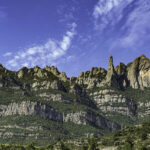
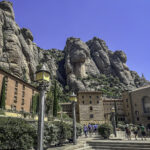
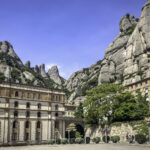
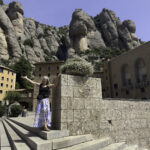
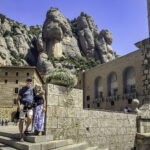
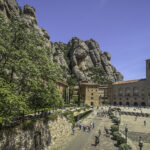
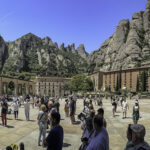
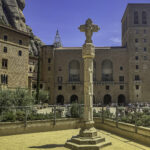
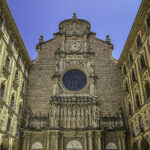
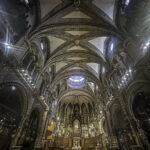
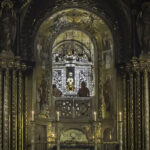
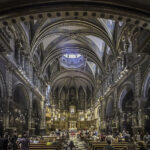
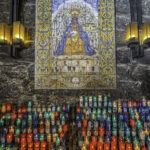
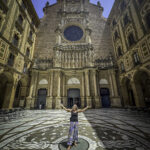
The next morning, we set out on a bus tour to one of Catalonia’s most sacred pilgrimage sites: the Santa Cueva de Montserrat. Nestled high in the serrated mountains west of Barcelona, this holy cave is traditionally believed to be the place where shepherds discovered the revered Black Madonna—La Moreneta—around the year 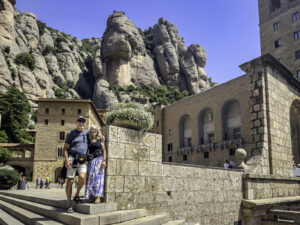 880. That discovery led to the founding of the nearby Benedictine Abbey of Montserrat, which grew into one of Spain’s most important spiritual and cultural centers.
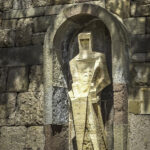
The Holy Cave is reached by a winding mountain path carved into dramatic cliffs that overlook deep valleys and rugged peaks. Along the route stand chapels and sculpted monuments depicting the mysteries of the rosary, many created by Catalan artists of the 19th and early 20th centuries. The small chapel built into the cave itself marks the sacred spot of the Madonna’s discovery and preserves centuries of devotional tradition.
Surrounded by the striking geology of Montserrat’s multi-peaked massif, Santa Cueva offers a blend of natural grandeur and spiritual serenity. For pilgrims and visitors alike, it remains one of the most atmospheric and historically meaningful sites in the Catalan landscape. Click on thumbnail to view images
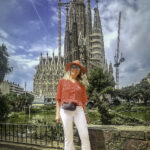
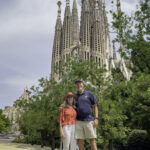
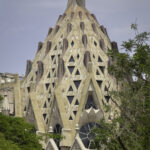
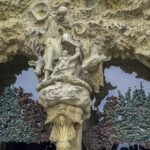
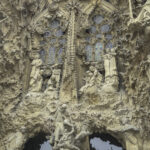
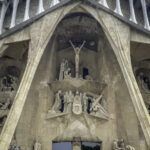
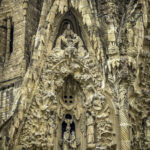
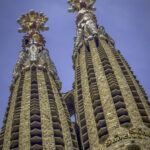
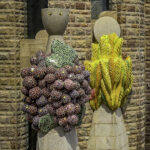
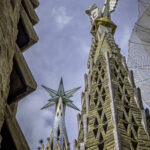
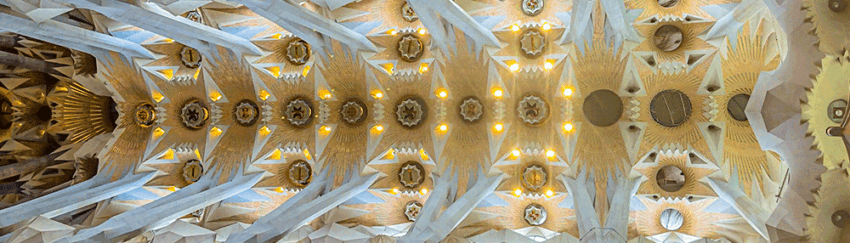
On our final full day in Barcelona we set up a tour 0f the Sagrada Família, Barcelona’s most iconic monument, is the lifelong masterpiece of Antoni Gaudí and one of the most ambitious church constructions in history. Begun in 1882 and still under construction today, the basilica blends Gothic principles with Gaudí’s groundbreaking organic architecture, drawing inspiration from the natural world to create a structure unlike any other. Gaudí devoted the final years of his life entirely to the project, 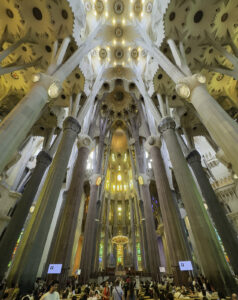 designing a building meant to function as a vast symbolic narrative of Christianity carved in stone.
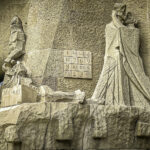
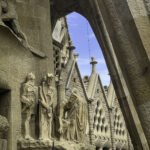
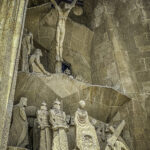
The church features three monumental façades, each expressing a central chapter of the Christian story. The Nativity Façade, completed largely during Gaudí’s lifetime, bursts with life, botanical motifs, and joyful detail. The Passion Façade, designed to appear severe and angular, conveys the drama and suffering of Christ’s final days. The future Glory Façade, still in progress, will be the grandest of all, representing the path to salvation.
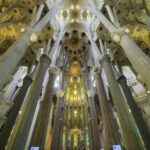
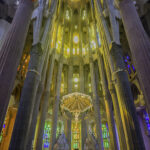
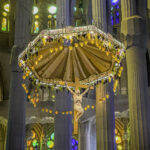
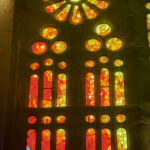
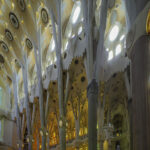
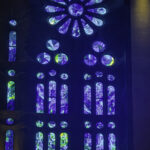
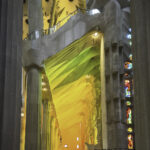
Inside, the basilica’s soaring columns branch like trees, supporting vaults shaped by geometric forms found in nature. Light pours through expansive stained-glass windows designed by artist Joan Vila-Grau, bathing the interior in shifting colors that change with the time of day. When complete, the Sagrada Família will feature 18 towers, including the central Jesus Tower, which will make it the tallest church in the world.
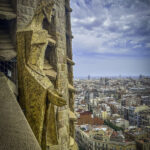
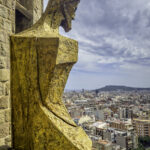
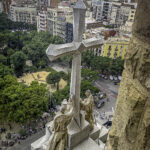
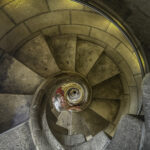
As part of our tour, we climbed one of the Sagrada Família’s towers, an experience that offered an entirely new perspective on both Gaudí’s vision and the city itself. The narrow stairways and sculpted passageways led us upward until we stepped out onto viewing platforms high above Barcelona. From here, the panorama was breathtaking—stretching from the colorful mosaics of Park Güell to the distant shimmer of the Mediterranean Sea.
Recognized as a UNESCO World Heritage Site, the Sagrada Família stands as both a symbol of Barcelona and the enduring legacy of Gaudí’s visionary genius—an ever-evolving masterpiece that continues to rise more than a century after its foundations were laid. Click on thumbnail to view images