 We began the second and final week of our bike-and-barge tour with a sense of gratitude and excitement, ready to start working our way from Maastricht back to Amsterdam. The journey so far has been nothing short of amazing—filled with memorable rides, fascinating history, and wonderful company—and it’s hard to believe how quickly the first week passed. As we set off again, we were eager for what lay ahead, knowing that the days to come promised more beautiful landscapes, engaging towns, and the steady rhythm that has made this adventure such a rewarding experience.
We began the day aboard the barge, cruising quietly from Maastricht toward Born along the Juliana Canal, an important shipping route that parallels the Maas River and allows commercial traffic to bypass shallow sections of the river. As we approached the locks near Born, we disembarked—once again reminded of how seamlessly water travel and cycling are woven together in the Netherlands.
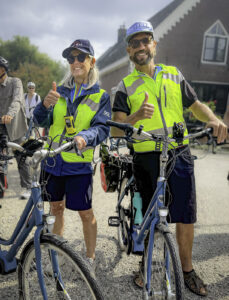
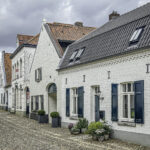
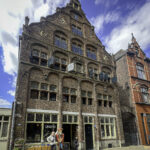
 From the locks, we set off by bicycle toward Thorn, riding through a peaceful landscape shaped by canals, fields, and tidy villages. Our destination was the famous “White Village” of Thorn, located near the Belgian border. Accompanied by our Group Leaders, we explored this remarkably picturesque town, instantly recognizable for its white-painted houses, a tradition that dates back centuries. The uniform white façades originated as a practical response to taxation—residents whitewashed their homes to make them appear modest and reduce church taxes.
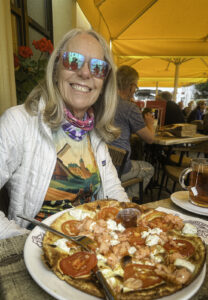
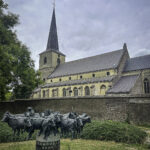
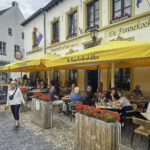
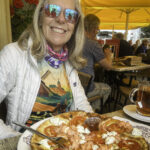
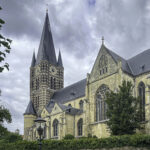
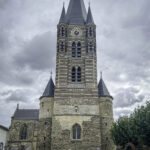
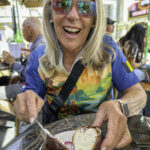
We vtook time for lunch ordering pannekoeken—the large, thin Dutch pancakes that can be served sweet or savory and are a local favorite. It was the perfect mid-day pause, hearty and relaxed, before continuing our visit. Following lunch, we toured St. Michael’s Church, the village’s striking 14th-century landmark and the only building in Thorn not painted white. Its dark stone exterior and solid medieval form stand in deliberate contrast to the surrounding whitewashed houses, and inside, the church reflects centuries of religious, civic, and architectural history that anchor Thorn’s identity as the famed “White Village.”
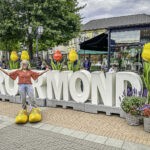
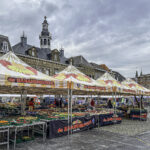
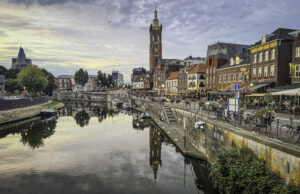 After arriving in Roermond, we made a stop at the city’s giant outlet mall, one of the largest in Europe, where modern shopping meets historic surroundings just steps from the old town. With its wide selection of international brands and relaxed pedestrian layout, it was a fun and lively contrast to the quiet villages we had cycled through earlier in the day.
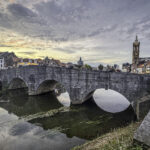
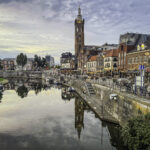
After dinner, we took time to explore Roermond itself, wandering through its historic center and along the waterfront. The town’s blend of medieval streets, church spires, and lively squares gave it an inviting evening atmosphere, and strolling after dark offered a chance to unwind and reflect on another full and rewarding day of cycling, culture, and discovery. Click on thumbnail to view images

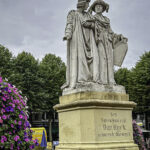
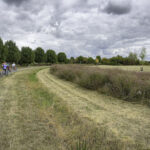
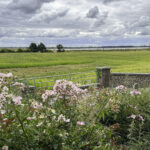
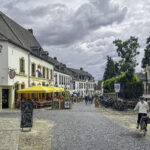
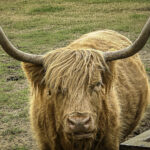
We set out by bicycle toward Venlo, riding alongside our Group Leaders through the gentle countryside of Limburg, a region where daily life still feels closely tied to the land and the river. Early in the ride, we were amused to spot what looked very much like Highland cows grazing in the fields—shaggy coats and sweeping horns that felt 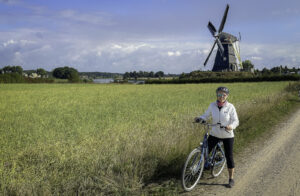 more at home in Scotland than the Netherlands, yet perfectly adapted to these low, grassy pastures.
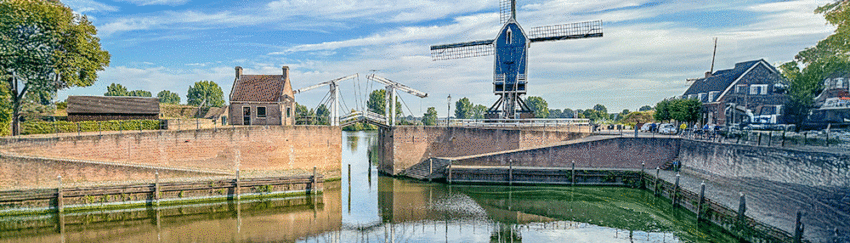
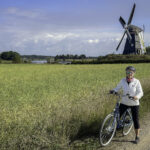
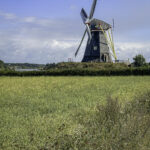
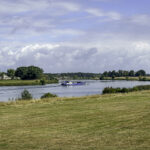
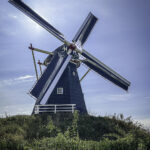
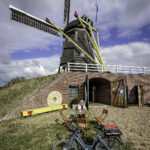
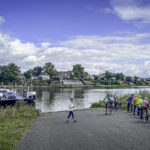
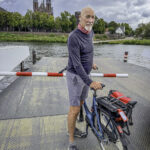
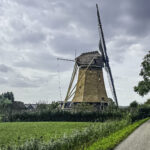
Along the way, we stopped at a working windmill, a reminder that these iconic structures were not just picturesque symbols but essential tools of everyday life. Mills like this once ground grain, sawed timber, and managed water, serving as economic engines for surrounding villages. Soon after, we experienced our first ferry crossing on the Maas River, gliding quietly across the water with bikes aboard—a classic Dutch moment that highlighted how seamlessly cycling, waterways, and transport intersect here.
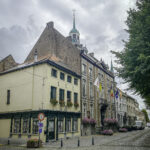
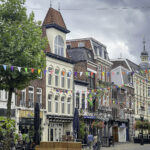
Arriving in Venlo, we stepped into one of the region’s oldest cities, with roots dating back to Roman times when the Maas served as a vital trade route. As we explored the city streets, we became more aware of the variety of Dutch dialects, 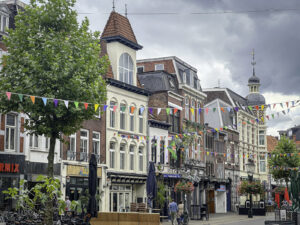 especially the local Limburg dialect, known for its softer “g” sounds and melodic tone—distinct even to Dutch ears and a mark of strong regional identity.
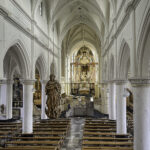
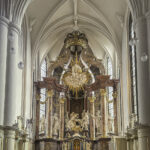
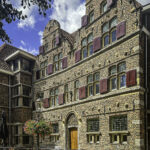
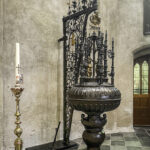
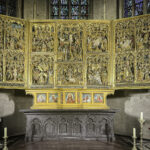
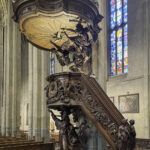
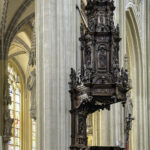
We took a tour of the Basilica of St. Martin, whose construction began in 1410 and was consecrated in 1430. Its Gothic architecture reflects Venlo’s medieval prosperity and long religious tradition. Nearby, we also visited the 17th-century Sint-Martinuskerk with a local expert and our Group Leaders. Inside, we admired its exquisite Baroque pulpit, vibrant 20th-century stained-glass windows, and learned how the church’s tower was rebuilt after World War II, a quiet testament to resilience and renewal.
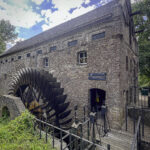
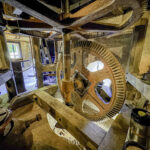
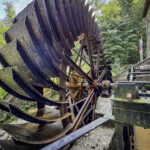
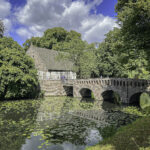
We finished our day by riding to the charming village of Arcen, where we visited an old watermill that once harnessed the steady flow of the river to power local industry. Seeing the mill in its historic setting offered another glimpse into how communities used natural resources long before modern machinery, adapting ingeniously to their environment. Click on thumbnail to view images
We began the day cycling toward Arcen, riding through the green countryside of northern Limburg under wide skies. Today’s route brought us close to the German 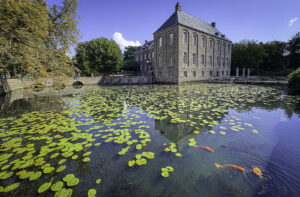 border, though there were no signs of checkpoints or controls—an easy reminder of how seamlessly borders have faded within Europe. As we pedaled, our Leaders pointed out one of the Netherlands’ great strengths for cyclists: the country has more bicycle paths than any other in the world, all clearly marked by the distinctive paddestoelen—low, mushroom-shaped road signs. Each carries a number tied to detailed cycling maps, along with distances and directions to nearby towns, making navigation remarkably intuitive.
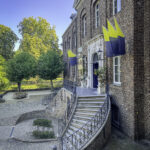
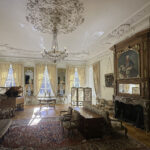
Our first stop was a guided tour of Arcen Castle and Gardens, a beautifully preserved estate whose origins date back to the 17th century. The castle’s elegant rooms and layered history reflect centuries of noble life along the Maas, while the Gardens of Arcen spread out in a series of themed landscapes—formal parterres, water features, woodland paths, and 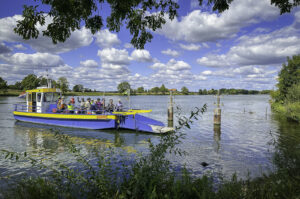 flowering borders—showcasing Dutch horticultural tradition at its finest. It was a peaceful and richly textured introduction to the day.
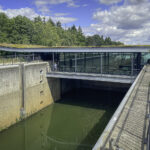
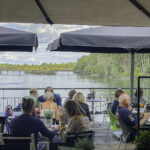
Lunch followed at Restaurant de Sluis in Arcen, set right beside the old sluis (lock) on the Maas River. Watching boats move through the lock while enjoying a relaxed meal perfectly captured the rhythm of life along this waterway. Throughout the day, we crossed the Maas River three times on small ferry boats, each crossing a gentle, quintessentially Dutch moment that blended cycling with river travel.
In the afternoon, we rolled onward through villages and fields, pausing for a gelato break in Boxmeer—a simple pleasure that felt especially welcome after a full morning of riding and sightseeing. By late afternoon, we arrived in Cuijk, a historic town on the Maas with Roman roots and a proud local identity.
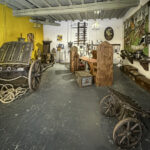
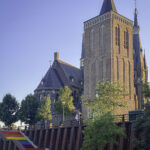
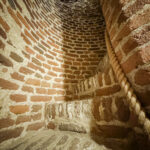
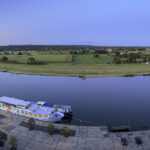
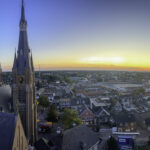
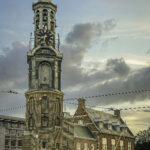
That evening, we toured the local museum, in one of the town’s most iconic landmark, the church tower. Built in the 15th century in Gothic style and rising to nearly 70 meters, the tower rewarded us with expansive views over the Maas River and the sun setting over the surrounding countryside. Click on thumbnail to view images
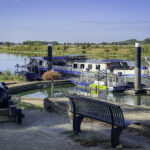
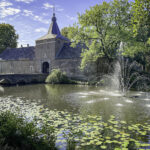
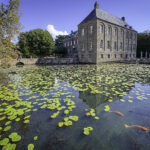
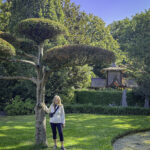
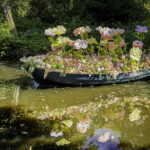

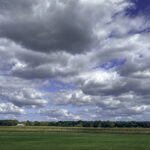
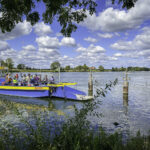
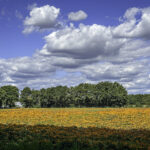
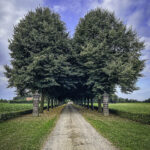
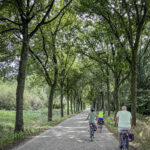
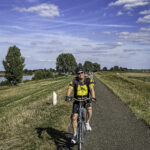
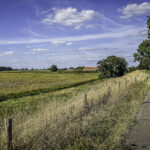
We set out on a beautiful day of cycling, riding atop the dikes along the Maas River, where the landscape opened wide on either side—green pastures, slow-moving water, and distant church towers marking village centers. Long stretches of the route passed beneath tree-lined canopies, their branches forming natural tunnels of shade, before opening again into expansive fields shaped by centuries of careful water management. It was classic Dutch riding at its best: flat, scenic, and deeply connected to the river that has long sustained this region.
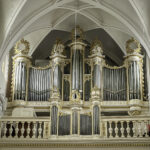
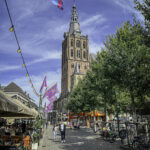
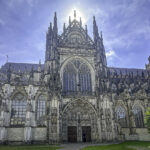
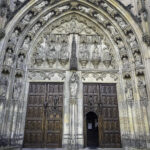
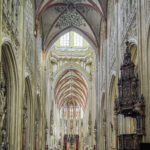
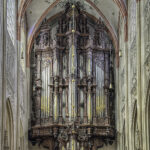
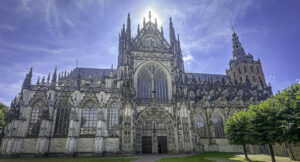 By midday we reached ’s-Hertogenbosch, more commonly known as Den Bosch, where we stopped for lunch and exploration. The city’s crown jewel is St. John’s Cathedral, often called “the Crown of Brabantine Gothic.” Rising dramatically above the city, its main tower reaches about 73 meters, giving the cathedral an unmistakable silhouette. Originally founded in the Romanesque period, the church was transformed between the 14th and 16th centuries into a magnificent Brabantine Gothic cathedral—the largest Gothic church in the Netherlands, measuring 115 meters long and 62 meters wide at the transept. Its exterior is famous for a forest of spires, elaborate flying buttresses, and 96 sculpted figures that seem to watch over the city. Inside, we admired the soaring space and learned about the great
  organ, one of the most important historic instruments in the country, built in the 17th century and still used for concerts today.
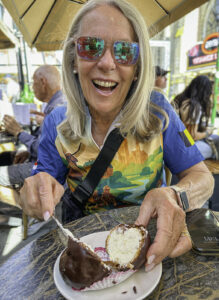
No visit to Den Bosch would be complete without tasting its most famous treat—the Bossche Bol. This indulgent pastry, a large ball of choux filled with whipped cream and coated in a thick layer of dark chocolate glaze, fully lived up to its reputation. One word summed it up perfectly: WOW.
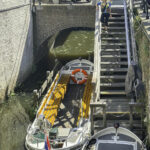
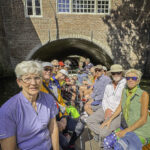
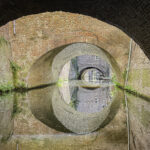
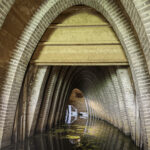
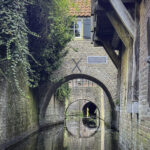
In the afternoon, we experienced one of Den Bosch’s most distinctive attractions—a boat trip on the Binnendieze, the hidden network of canals that flows beneath and between the city’s buildings. Gliding through narrow waterways, sometimes completely under houses and streets, offered a unique perspective on the city’s medieval origins and daily life. It was both fascinating and unforgettable.
Leaving Den Bosch behind, we continued our afternoon ride toward Heusden, once again following quiet paths through open countryside. By late day we arrived in Heusden, a quaint, beautifully preserved fortified town with cobbled streets, historic ramparts, and a harbor that reflects its long history as a strategic river settlement. The calm atmosphere and storybook setting made it a perfect place to end a rich and rewarding day—one that blended cycling, architecture, local flavor, and the timeless presence of the Maas River. Click on thumbnail to view images
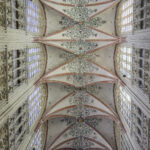
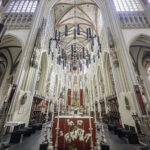
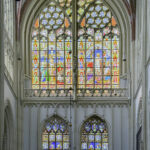
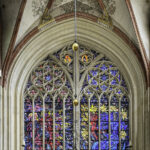
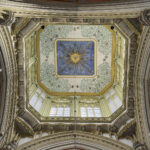
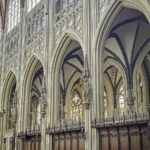
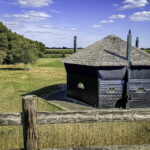
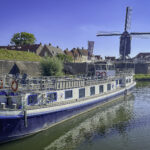
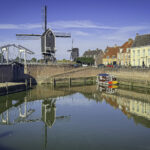
We began the day with a guided walking tour of Heusden, one of the best-preserved fortress towns in the Netherlands. Enclosed by star-shaped ramparts and moats, Heusden’s cobbled streets, restored gabled houses, and small harbor tell the story of a town rebuilt with care after World War II to reflect its medieval character. 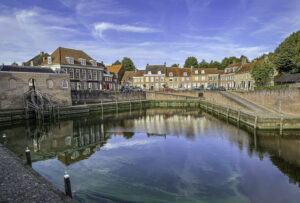 We visited St. Catherine’s Church, whose origins date to the 14th century, learning how the church evolved alongside the town’s defenses and civic life.
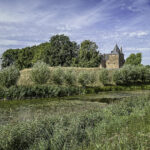
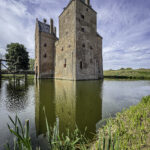
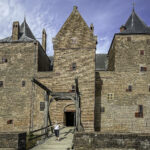
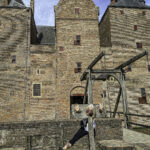
Leaving Heusden by bike, we followed quiet paths along the rivers, making several ferry crossings—each one a gentle reminder of how water still shapes daily movement here. By midday we reached Loevestein Castle, dramatically situated at the confluence of the Maas and Waal Rivers. Built around 1361 by the knight Dirk Loef van Horne—from whom the name Loef’s stein (“Loef’s stone fortress”) derives—the castle is a place where three layers of Dutch history intersect: a 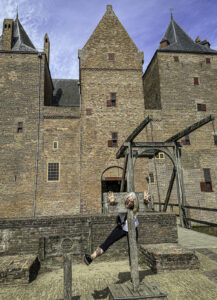 medieval knight’s stronghold, a strategic fortress of the Dutch Republic, and later a state prison. After lunch, a guided tour brought these eras to life, from battlements guarding vital waterways to stories of famous prisoners and political intrigue.
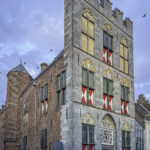
In the afternoon we cycled onward and rode into Vianen, a small town with an outsized history. Vianen was once a medieval “free city,” meaning it operated outside the authority of surrounding regions. This special status allowed merchants, craftsmen, and even fugitives to settle here with greater freedoms than elsewhere—a tradition reflected in the town’s independent spirit. We strolled past the Town Hall, a symbol of that autonomy, and through the historic center, where the only surviving medieval city gate (dating from the 15th century) still marks the old boundary.
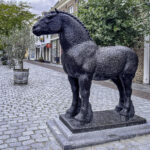
After dinner, we enjoyed an evening walk through Vianen’s quiet streets, learning about long-standing traditions such as the annual horse market, which traces its roots back to the Middle Ages and once drew traders from across the region. As dusk settled, the town felt calm and timeless—a fitting close to a day that traced rivers, castles, and the enduring idea of freedom along the Dutch waterways. Click on thumbnail to view images
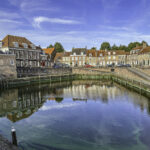
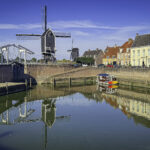
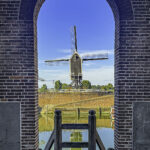
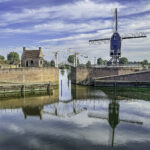
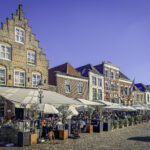
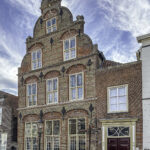
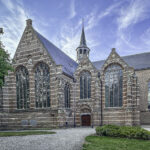
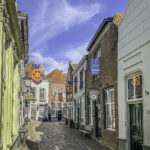
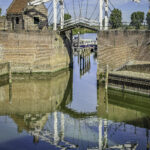
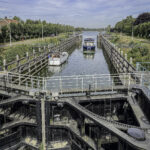
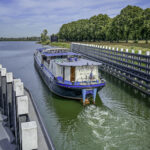
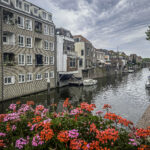
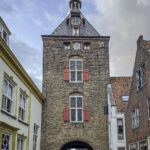
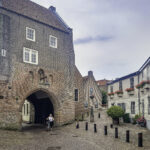
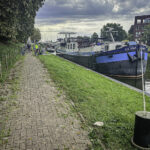
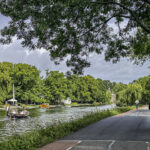
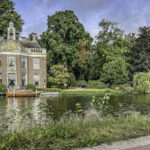
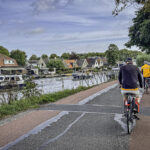
We set out on our final day of biking in the wonderfully scenic region of Stichtse Vecht, a municipality that follows the gentle curves of the Vecht River—one of the most beautiful waterways in the Netherlands. This area is renowned for its historic villages, elegant country estates, and numerous bridges spanning the river, 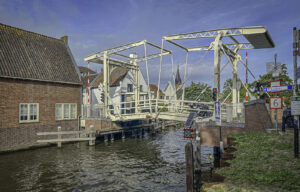 reflecting centuries of prosperity tied to trade, transport, and leisure.
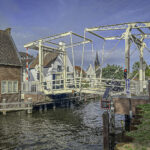
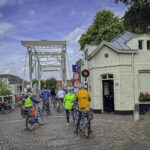
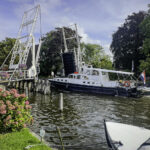
Our ride began in Breukelen, a charming riverside town with a name that resonates far beyond the Netherlands. Historically, Breukelen gave its name to Brooklyn, New York, when Dutch settlers named their New World community after their hometown. While waiting to cross the river, we admired the town’s most iconic landmark—the iron lift bridge, which connects the old village center of Breukelen with the opposite bank. Watching boats pass beneath as the bridge rose and fell felt like a living postcard of Dutch engineering and daily life.
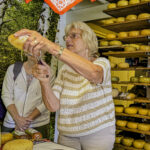
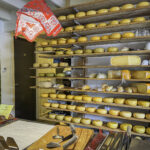
Cycling onward along quiet paths beside the Vecht, we passed stately homes and leafy riverbanks before stopping for a tour and demonstration at a local cheese factory. Learning about traditional Dutch cheesemaking—sampling included—was a delicious reminder of how deeply food culture is woven into regional identity. From there, we continued to Nigtevegt, a small, peaceful village where we had time to s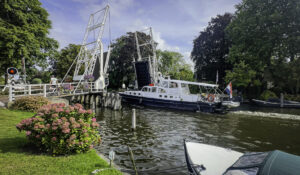 troll, relax, and enjoy lunch at an unhurried pace.
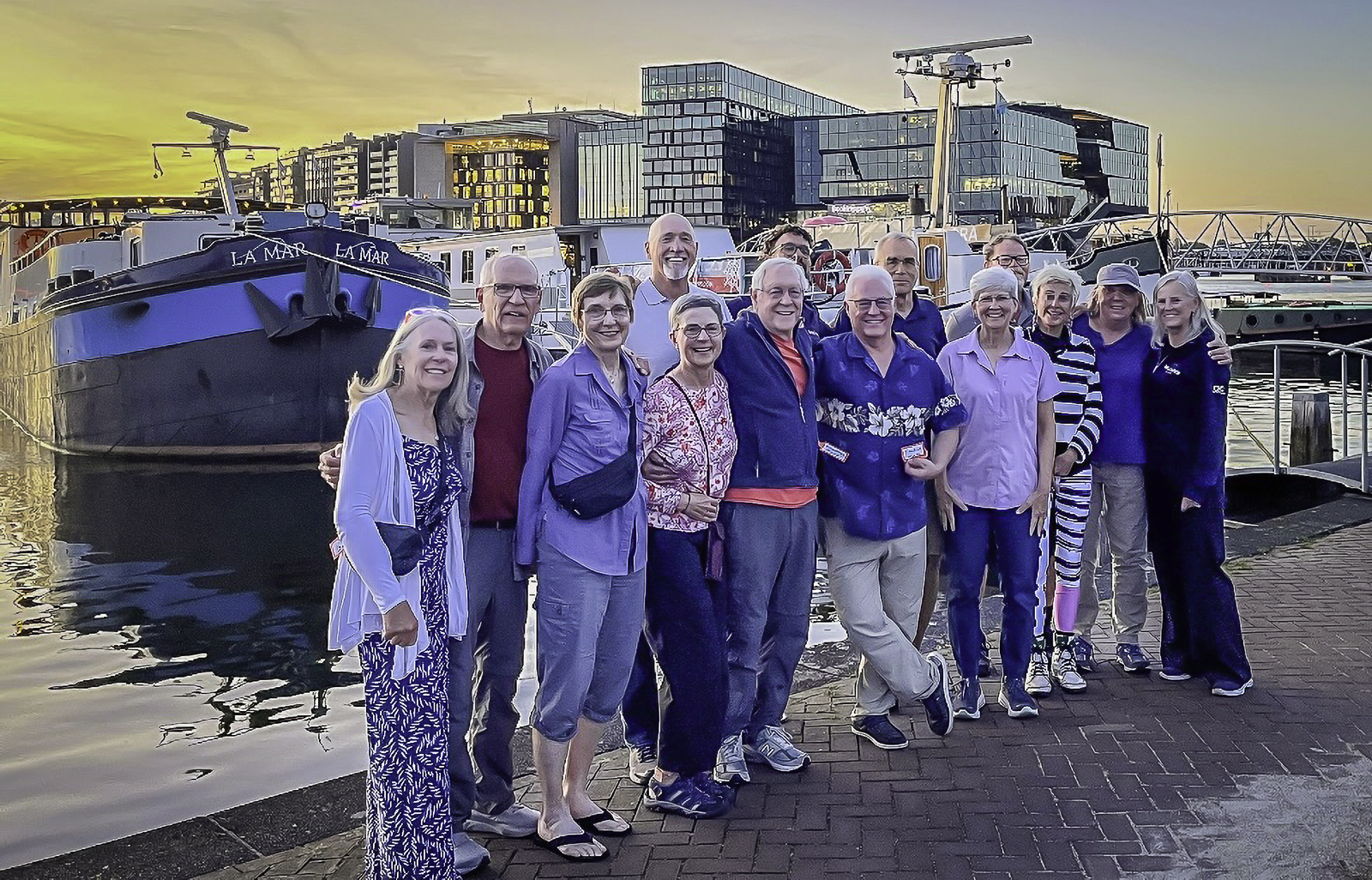
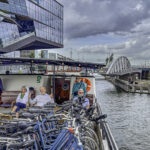
After lunch, we reunited with our barge, La Mar, and settled onto the deck as we began the leisurely cruise toward Amsterdam, our final destination and the place where this journey had begun. Gliding along the waterways, it was easy to reflect on the past two weeks—how quickly they had passed and how rich they had been with shared experiences.
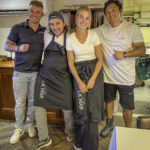
Arriving in the Port of Amsterdam, one of Europe’s great harbors, felt like a full-circle moment. That evening marked our last night aboard La Mar, and the crew made it unforgettable. Captain Marnik, Chef Joel, Hostess Esmee, and Sailor Richard had been exceptional throughout—professional, warm, and endlessly attentive. The four-course farewell dinner was truly out of this world, and Esmee, in particular, embodied hospitality in every sense: hostess, server, and friendly presence all in one.
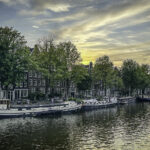
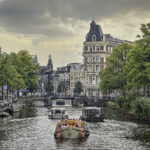
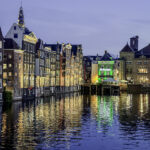
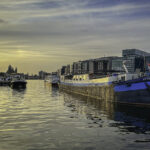
As the evening drew to a close, it was hard to say goodbye—to the crew who had taken such good care of us and to the fellow travelers we had come to know so well over the last two weeks. It was another great journey with Road Scholar, whose thoughtful planning and expert guidance once again delivered an outstanding experience. Yet even with that touch of sadness, there was excitement too. One adventure was ending, but another was just beginning. We were already looking forward to four more days in Amsterdam, eager to uncover more of the city’s secrets while staying at the lovely Hotel De L’Europe, perfectly set along the Amstel River for the next chapter of our travels.