Leaving Dublin,
Leaving Dublin behind, we began the next chapter of our Irish adventure—a scenic road trip south through historic towns, medieval castles, picturesque coastal villages and some of Ireland’s most memorable landscapes. We began our drive southwest toward Killarney, setting out to explore the easter side of Ireland. Our first stop was the beautiful seaside town of  Dalkey, where we met up with an old high school friend, Jim McCormick, and his wife, Brigid, and shared a lovely, leisurely lunch—great to see old friends again in such a wonderful location.
Dalkey is one of Dublin’s most charming coastal villages, long favored for its scenic setting, literary associations, and relaxed atmosphere. Nestled between the Irish Sea and the Dublin Mountains, the town has roots stretching back to Viking times, when its harbor served as an important port. Today, Dalkey is known for its picturesque streets, historic stone buildings, and strong cultural heritage—once home to writers such as George Bernard Shaw and a retreat for artists and musicians. With views toward Dalkey Island and the surrounding coastline, it was a perfect place to pause, reconnect with friends, and ease into the rhythm of our road journey before continuing on toward the landscapes of southern Ireland.
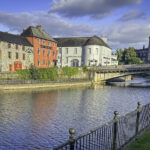
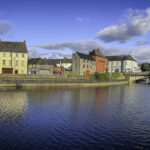
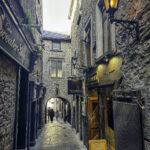
Our first night was spent in Kilkenny, a compact yet richly layered town often described as Ireland’s medieval capital. Wandering its streets, we were immediately struck by how much history is concentrated into such a walkable place. Narrow lanes, stone façades, and centuries-old buildings reveal Kilkenny’s origins as an early monastic settlement, later transformed under Norman rule into one of Ireland’s most important inland towns. During the Middle Ages, Kilkenny thrived as a center of 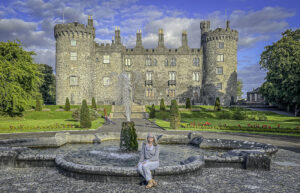 trade, religion, and political influence, and many of its churches, abbeys, and civic buildings still shape the town’s character today. Despite its deep past, Kilkenny feels lively and youthful, with bustling pubs, craft shops, and a strong tradition of music and storytelling.
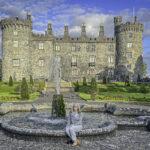
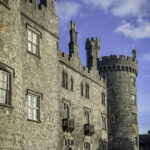
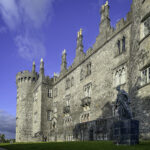
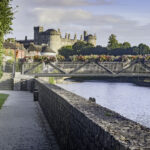
Presiding over the town is the imposing Kilkenny Castle, dramatically positioned above the River Nore. Built in the late 12th century by the powerful Butler family, the castle served as both a defensive stronghold and a symbol of Norman authority. For more than 600 years, it was the family’s principal residence, evolving from a medieval fortress into an elegant country house with refined Georgian interiors and landscaped grounds. Today, restored rooms and riverside walks offer a vivid glimpse into aristocratic life across centuries.
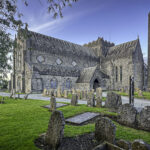
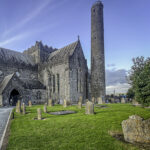
Just a short walk from the town center stands St Canice’s Cathedral, one of Ireland’s finest medieval cathedrals and a powerful symbol of Kilkenny’s religious heritage. 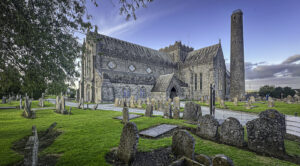 Built in the 13th century on the site of an earlier monastic settlement founded by St Canice in the 6th century, the cathedral is an impressive example of Early English Gothic architecture, with soaring stone walls, lancet windows, and a richly carved interior. Inside, medieval tombs, stained glass, and a remarkable collection of carved monuments tell the story of centuries of worship and local history.
Beside the cathedral rises St Canice’s Round Tower, one of the best-preserved round towers in Ireland. Dating from the 9th century, the tower once served as a bell tower, lookout, and place of refuge during Viking raids. Today, visitors can climb its narrow internal ladders to the top for sweeping views over Kilkenny’s rooftops, countryside, and castle in the distance
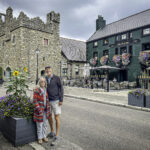
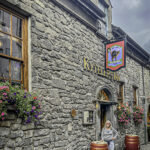
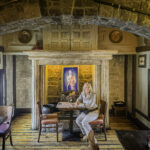
That evening, we settled into Kyteler’s Inn, one of Ireland’s oldest pubs, for dinner and a dose of atmosphere. Over hearty fare, we enjoyed traditional Irish music—fiddles and bodhráns filling the low-ceilinged rooms—an authentic and memorable way to end our first night and immerse ourselves in Kilkenny’s enduring spirit. Click on thumbnail to view images
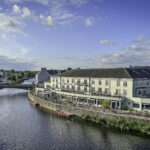
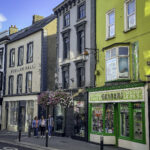
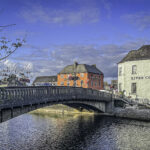
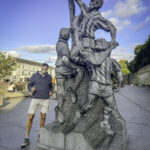

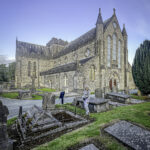
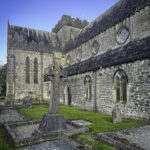
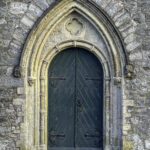
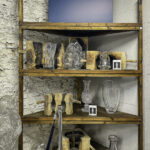
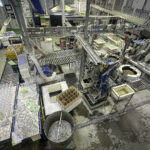
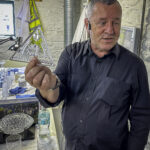
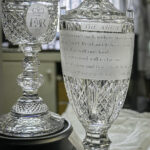
The next stop on our journey south was Kinsale, but along the way we made a must-stop visit to Waterford, a city whose name has long been synonymous with fine crystal craftsmanship.
 Waterford holds a special place in Irish history as Ireland’s oldest city, founded by Viking settlers in 914 AD. Its position along the River Suir made it an important trading port for centuries, linking Ireland with Britain and continental Europe. While Waterford’s medieval walls, towers, and quays still hint at its long past, the city gained worldwide fame in the late 18th century through the creation of Waterford Crystal.
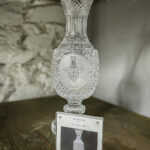
The Waterford Crystal tradition began in 1783, when brothers George and William Penrose established a glassworks with the ambition of creating crystal of the highest quality. Using exceptionally pure materials and meticulous hand-cutting techniques, Waterford crystal quickly earned an international reputation for brilliance, clarity, and precision. Over time, its chandeliers, stemware, and decorative pieces found their way into royal palaces, grand homes, and prestigious institutions around the world.
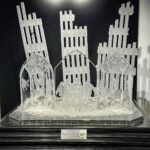
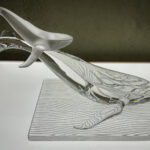
Our tour of the factory brought this legacy to life. Watching skilled craftsmen shape molten glass, cut intricate patterns by hand, and polish each piece to its signature sparkle gave us a deep appreciation for the artistry and labor behind the name. The combination of history, craftsmanship, and pride in tradition made Waterford a memorable and worthwhile stop—an ideal pause before continuing on to the colorful harbor town of Kinsale and the next chapter of our journey along Ireland’s South East coast. Click on thumbnail to view images








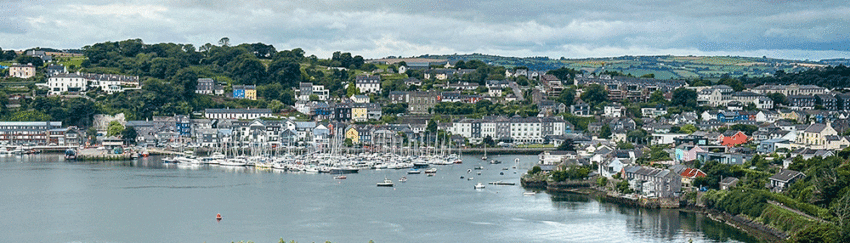
Kinsale is one of Ireland’s most picturesque and historically significant coastal towns, set at the mouth of the River Bandon along a deep natural harbor. Its strategic 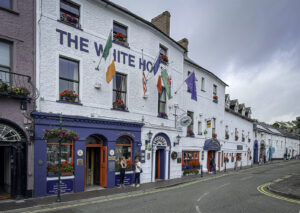 location made Kinsale a vital maritime gateway for centuries, linking Ireland with Europe through trade, fishing, and naval activity. The town’s brightly painted streets, compact center, and long seafaring tradition reflect a place shaped as much by the ocean as by history.
Kinsale is best known for its role in the Battle of Kinsale (1601), one of the most decisive events in Irish history. This battle marked the end of Gaelic resistance to English rule, when Irish forces allied with Spain were defeated by the English Crown. The outcome reshaped Ireland’s political future and paved the way for increased English control over the island. Because of this pivotal moment, Kinsale occupies a central place in Ireland’s national story.
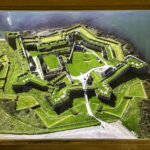
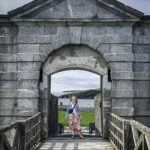
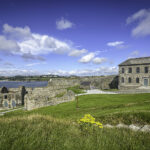
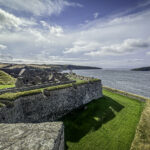
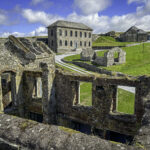
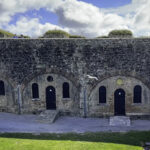
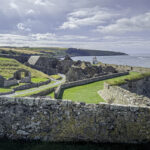
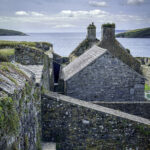
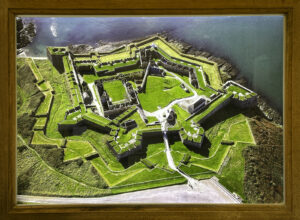 Guarding the harbor is Charles Fort, a massive star-shaped fortress built in the late 17th century following the Williamite Wars. Designed according to the latest European military engineering principles, the fort protected one of Ireland’s most important ports from foreign invasion. Its thick stone ramparts, bastions, and commanding views over the harbor illustrate the strategic importance of Kinsale during an era of constant naval rivalry. Charles Fort later served as a British military base for more than 200 years and witnessed episodes of conflict, tragedy, and legend—including the famous tale of the White Lady.
Together, Kinsale and its fortress tell a powerful story of maritime trade, military strategy, and turning points in Irish history. Today, the town’s relaxed atmosphere and culinary reputation contrast with its turbulent past, offering visitors a place where beauty, history, and cultural significance come together along Ireland’s southern coast. Click on thumbnail to view images

Leaving Kinsale behind, we followed the coast westward on our way to Killarney, where we would begin turning north to explore the rugged landscapes of Ireland’s Atlantic coast. The drive traced inlets, farmland, and quiet villages, offering a gradual transition from the gentle south coast to the wilder scenery that lies ahead.
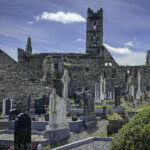
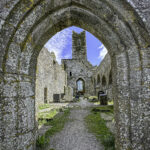
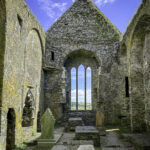
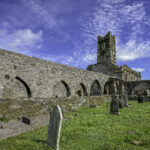
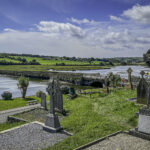
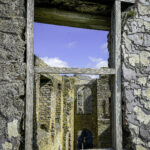
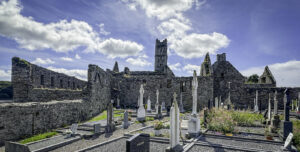 Along the way, we passed through the small village of Timoleague and stopped to visit the evocative ruins of Timoleague Friary. Founded in the 13th century, the friary was established by the Franciscan order, likely under the patronage of the Anglo-Norman Barry family, who were powerful landholders in the region. Set beside the tidal Argideen River, the abbey once served as an important religious and educational center, its location reflecting the medieval practice of placing monastic communities near water routes that supported trade and travel.
Over the centuries, Timoleague Friary endured periods of prosperity and hardship. Like many religious houses in Ireland, it suffered during the Dissolution of the Monasteries in the 16th century and later during the turbulent years of English rule, when it was damaged, abandoned, and reused by various groups. Despite this, the ruins remain remarkably atmospheric. Gothic arches, cloisters, carved stone details, and the remnants of tombs tell stories of devotion, learning, and community life that once flourished here.
Standing among the quiet stone walls, with the river flowing past and the countryside stretching beyond, the abbey offered a reflective pause on our journey—a reminder of Ireland’s deep monastic heritage and the layers of history embedded in even its smallest villages—before we continued on toward Killarney and the dramatic west coast beyond. Click on thumbnail to view images