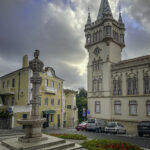
 After our exploration of southern Portugal, we continued north and arrived in the capital city of Lisbon, eager to delve deeper into the history and culture of this ancient and vibrant metropolis. With its hilltop vistas, winding cobbled streets, and rich maritime heritage, Lisbon promised countless discoveries. We were especially excited to visit the beautiful nearby town of Sintra, with its fairy-tale palaces and misty forests, as well as several fascinating sites in the surrounding region that reveal the depth and diversity of Portugal’s past.
Lisbon, Portugal’s capital and one of Europe’s oldest cities, rises over seven hills along the wide estuary of the Tagus River. With origins tracing back to Phoenician and Roman settlements, the city later flourished under Moorish rule, leaving a legacy of winding streets, fortified quarters, and distinctive tilework. After the Christian reconquest in the 12th century, Lisbon grew 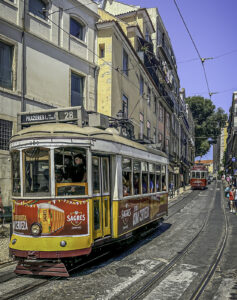 into a major maritime power, and during the Age of Discovery it became the launching point for expeditions that reshaped world history.
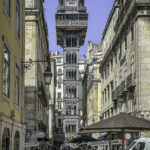
We took the Elevator Santa Justa, an elegant wrought-iron lift built in 1902, rises dramatically from the Baixa district, connecting the lower city to the Carmo Square above. Designed by Raoul Mesnier du Ponsard, a student of Eiffel’s circle, it offers sweeping views over Lisbon’s rooftops, the Tagus River, and the castle-topped hills that define the city’s skyline.
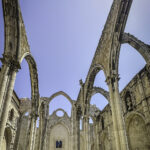
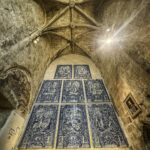
Just a short walk away stands the hauntingly beautiful Carmo Convent, whose roofless Gothic arches remain as a powerful reminder of the 1755 earthquake that devastated Lisbon. Once one of the city’s grandest religious complexes, its open sky vaults create an unforgettable fusion of ruin and tranquility.
Nearby, the Cathedral of Lisbon—known as the Sé—anchors the Alfama district with its sturdy Romanesque façade and fortress-like towers. Founded in the 12th century after the Christian reconquest, it is the city’s oldest church, preserving layers of history through its cloister, treasury, and chapels that trace Lisbon’s spiritual and cultural evolution over nearly nine centuries.
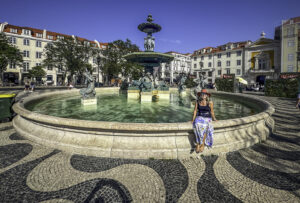
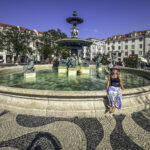
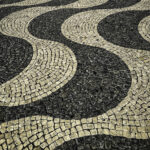
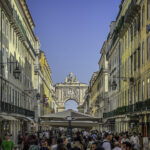
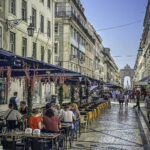
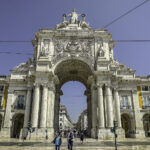
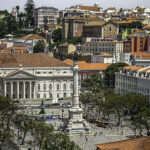
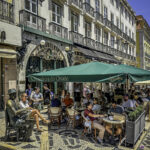
To the west lies Rossio Square, one of Lisbon’s most vibrant public spaces. Surrounded by cafés, theaters, and grand 19th-century buildings, the square is instantly recognizable for its striking black-and-white ceramic wave tiles—a pattern inspired by the movement of the sea. These undulating mosaics give the plaza a dynamic, almost optical quality as they ripple beneath the flow of daily life, symbolizing Lisbon’s deep connection to the ocean and its seafaring heritage.
With its bright light, maritime heritage, and blend of ancient and modern influences, Lisbon remains one of Europe’s most atmospheric and historically rich capital cities. Click on thumbnail to view images



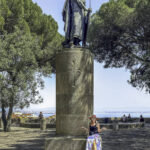
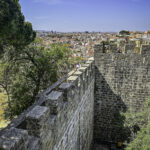
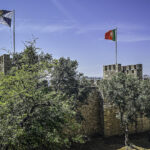
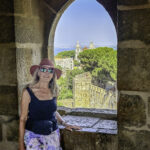
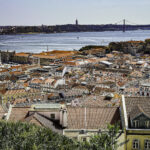
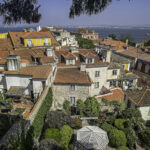
One day we took a side trip to explore the mysteries of Sintra, nestled in the misty forested hills west of Lisbon, has long been one of Portugal’s most magical and historically rich towns. Its cool microclimate and granite peaks made it a favored retreat for Moorish rulers, Portuguese royalty, and later European romantics. The result is a landscape filled with palaces, castles, and gardens that seem drawn from legend.
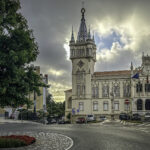
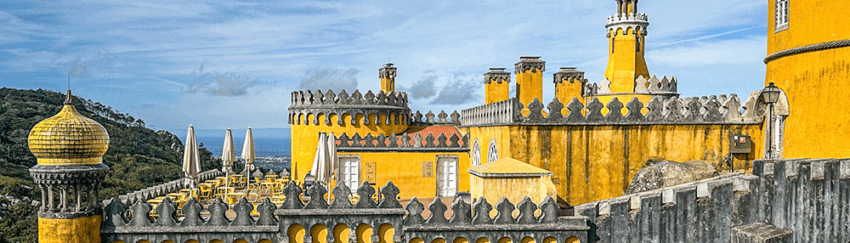
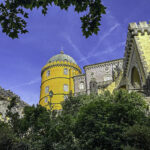
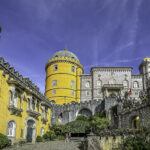
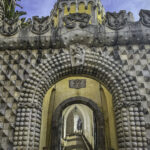
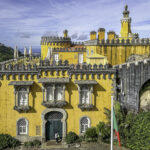
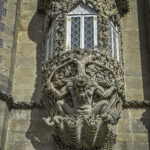
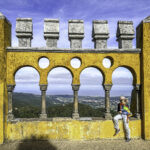
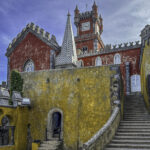
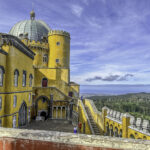
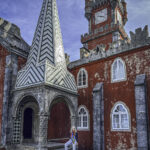
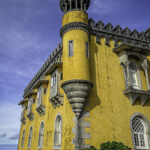
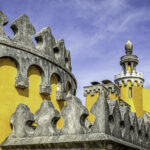
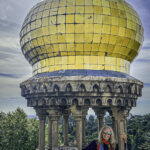
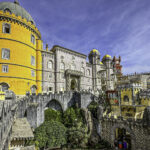
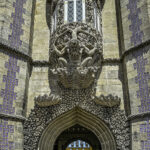
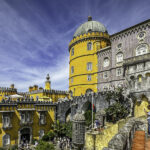
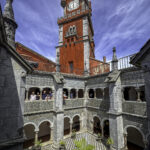
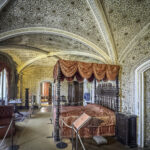
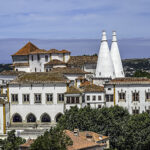
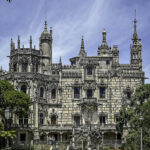
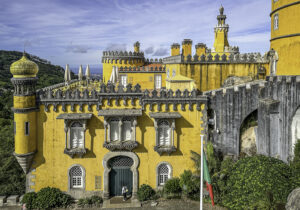 High above the town, the Moorish Castle offers sweeping views over the Atlantic and surrounding countryside. Nearby, the vivid Pena Palace—a 19th-century Romantic creation blending Gothic, Manueline, and Moorish styles—rises from dramatic mountaintop forests. In the valley below, the National Palace of Sintra, with its iconic conical chimneys, preserves centuries of royal life from the medieval through the Renaissance eras.
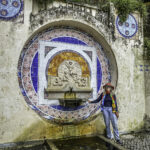
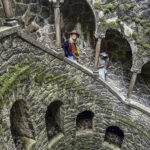
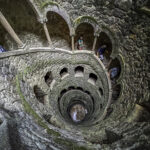
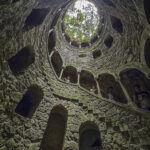
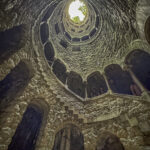
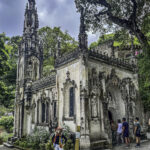
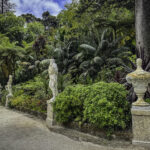
Among Sintra’s most intriguing sites is Quinta da Regaleira, an estate filled with gardens, grottoes, tunnels, and symbolic architecture. Its most famous feature, the Initiation Well, is a spiraling subterranean staircase descending deep into the earth. Designed in the early 20th century, it draws heavily on Masonic, alchemical, and esoteric symbolism, with numerology, celestial references, and ritualistic imagery woven into its design. The well was never intended for water but rather as a symbolic journey—ascending from darkness to light.
With its blend of natural beauty, royal heritage, and layers of mythic and esoteric symbolism, Sintra remains one of Portugal’s most atmospheric destinations—a place where history, imagination, and mystery meet in the hills above the sea. Click on thumbnail to view images
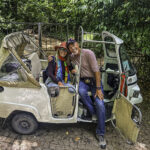
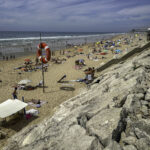
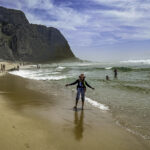
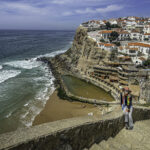
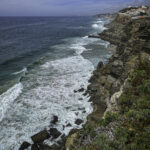
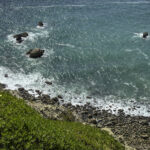
As we were leaving the Pena Palace we were befriended by local,Miguel, who offered us an exclusive tour of Sintra and the surrounding areas in his Ferrari Tik Tuk. It was an offer to good to refuse. After a somewhat harrowing drive through the narrow winding streets of Sintra wee made our way to the rugged Atlantic coastline west of town. 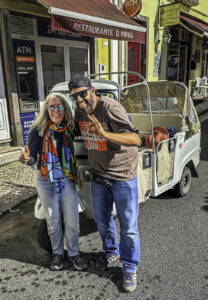 Praia da Ursa, Praia da Aroeira, and Cabo da Roca form one of Portugal’s most dramatic coastal landscapes. Praia da Ursa, named for its bear-shaped sea stack, is a wild and secluded beach reached by a steep footpath. Known for its towering cliffs, sculpted rock formations, and powerful surf, it offers a raw, untouched beauty that captures the spirit of Portugal’s western edge.
A short distance away lies Praia da Aroeira, a quieter and lesser-known stretch of coastline marked by windswept dunes, rocky headlands, and sweeping views of the Atlantic. Its rugged solitude and natural surroundings make it a peaceful contrast to Sintra’s more visited locations.
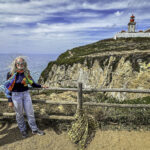
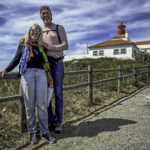
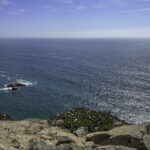
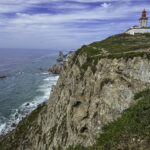
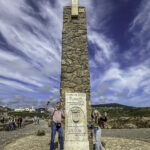
Both beaches sit just north of Cabo da Roca, the westernmost point of mainland Europe. Rising high above the ocean, Cabo da Roca has long been viewed as the “end of the earth,” a windswept promontory where cliffs plunge dramatically into the sea. The lighthouse here marks a symbolic meeting of land and ocean, and the panoramic views capture the vastness of the Atlantic horizon. After signing the guestbook we received our certificates for being at the westernmost point of Europe. We made our way back to Sintra from the coast where Miguel joined for a drink at a restaurant he highly recommended.
Together, Praia da Ursa, Praia da Aroeira, and Cabo da Roca reveal the wild, untamed character of Portugal’s western coast—where steep cliffs, hidden beaches, and ocean winds define one of the country’s most striking natural regions. Click on thumbnail to view images