 The Isle of Skye, the largest and most celebrated of Scotland’s Inner Hebrides, is a landscape where dramatic geology, deep history, and Gaelic culture come together in unforgettable ways. Connected to the mainland by a modern bridge yet retaining the feeling of a remote island, Skye is defined by its rugged mountains, sweeping moors, sea cliffs, and quiet crofting villages. The island’s iconic landmarks—such as the Eilean Donan Castle, Cuillin Range, the Fairy Pools, and the Old Man of Storr—create some of the most striking scenery in the Highlands.
Long associated with ancient clans, Norse influence, and Gaelic traditions, Skye carries a sense of myth and storytelling that lingers in its place names and folklore. Whether exploring its wild landscapes, historic castles, or tranquil lochs, visitors quickly understand why Skye has become one of Scotland’s most beloved destinations—a place where nature and history feel deeply intertwined.
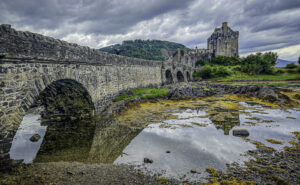
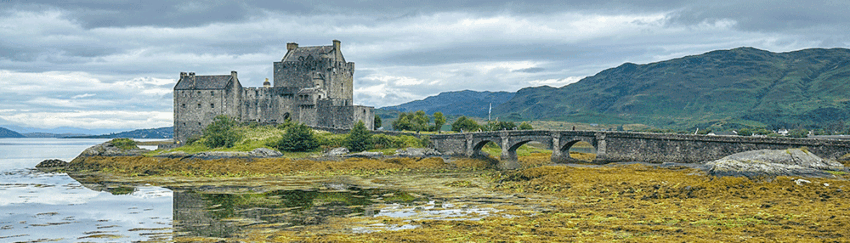
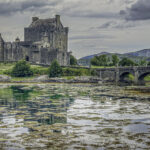
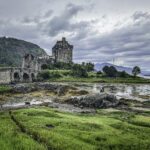
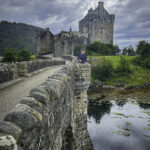
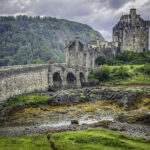
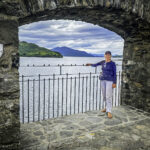
Our first stop on the way to the Isle of Skye was the legendary and beautifully situated Eilean Donan Castle, one of the most photographed and beloved landmarks in all of Scotland. Set on a small tidal island where **three sea lochs—Loch Duich, Loch Long, and Loch Alsh—**converge, the castle’s dramatic location gives it an almost mythical presence. Reflections of its stone walls in the surrounding waters, combined with the ever-changing Highland light, have made it an enduring symbol of Scotland’s rugged beauty and romantic past.
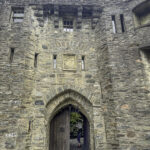
Originally established in the 13th century, Eilean Donan served as a stronghold of the Mackenzie and MacRae clans and played a significant role in protecting the western approaches to the Highlands. Over the centuries, it witnessed clan rivalries, royal intrigue, and military conflict, including involvement in the Jacobite uprisings of the early 18th century. Following a failed Jacobite action in 1719, the castle was heavily damaged by government forces and left in ruins for nearly two hundred years.
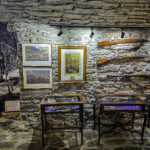
In the early 20th century, the castle was painstakingly restored, guided by historical research and traditional craftsmanship. The structure that stands today is both a careful reconstruction and a heartfelt tribute to the resilience of Highland culture and identity. Crossing the graceful stone footbridge toward its fortified walls—framed by sweeping lochs and distant mountains—offers an unforgettable introduction to the dramatic island landscapes that define western Scotland and sets the tone for the journey ahead. Click on thumbnail to view images


From Eilean Donan, we crossed the bridge onto the Isle of Skye and began driving north along the island’s rugged east coast, a route renowned for showcasing some of Skye’s most iconic and otherworldly scenery. The landscape unfolded dramatically with every mile—rolling hills giving way to jagged cliffs, sea lochs reflecting shifting 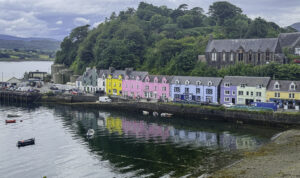 skies, and distant peaks emerging through mist and sunlight. This drive offered a powerful introduction to Skye’s raw beauty and geological drama.
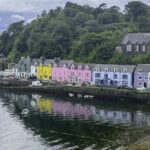
We passed through the colorful harbor town of Portree, Skye’s main settlement and cultural heart. Its charming waterfront is lined with pastel-painted buildings that curve gently around the bay, while fishing boats bob in the harbor below steep green hills. The lively central square, filled with cafés, shops, and galleries, reflected the island’s blend of traditional Highland life and modern tourism. Leaving Portree behind, we continued north toward the Trotternish Peninsula, a region shaped by ancient volcanic activity and massive landslides.
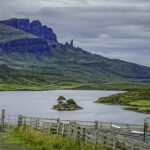
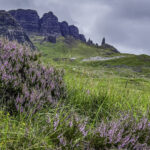
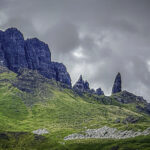
Before long, the unmistakable silhouette of the Old Man of Storr rose into view—its jagged basalt pinnacle standing dramatically against the sky. Formed by prehistoric landslips and sculpted over millennia by wind, rain, and ice, the Old Man is one of Skye’s most recognizable 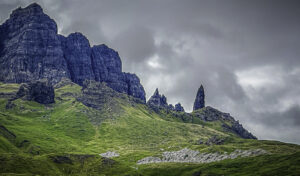 landmarks. Towering above the surrounding slopes, it carries an almost mystical presence, often shrouded in cloud or glowing in sudden bursts of sunlight.
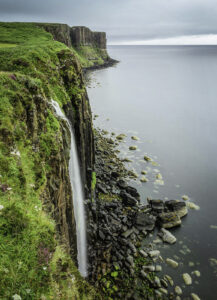
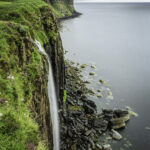
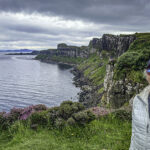
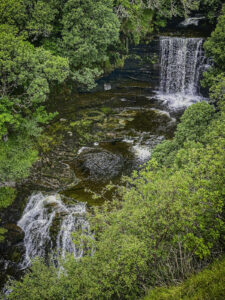 worked in dangerous conditions high above the water. The combination of rushing water, rugged rock walls, and open coastal views made this stop feel both remote and timeless.
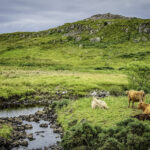
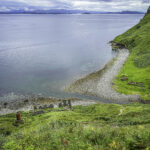

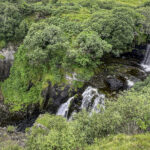
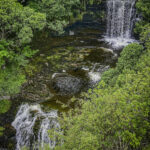
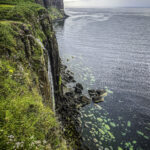
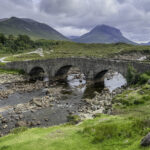
Before turning toward the Fairy Pools, we passed the historic Sligachan Old Bridge, a graceful stone span dating to the early 19th century. Built in 1818 by renowned engineer Thomas Telford, the bridge has long served as a gateway between Skye’s coastal routes and the island’s wild interior. Set against the sweeping backdrop of the 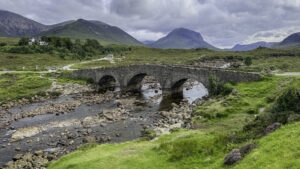 Cuillin Mountains, it is steeped in local legend—most famously the belief that washing one’s face in the nearby waters can grant eternal beauty, provided no one is watching. Whether for myth or for scenery, Sligachan has long been a place where travelers pause to take in the raw grandeur of Skye.
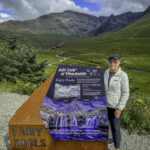
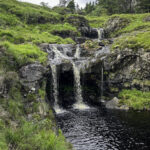
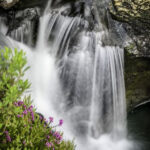
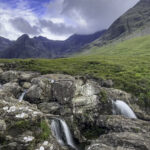
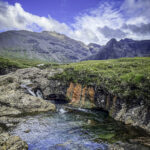
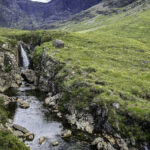
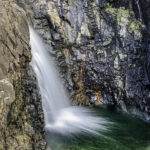
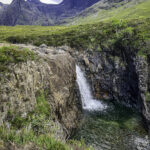
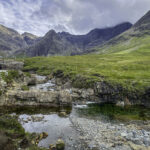
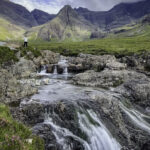
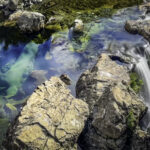
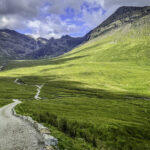
From Sligachan, we detoured toward one of the island’s most enchanting landscapes—the Fairy Pools, nestled at the 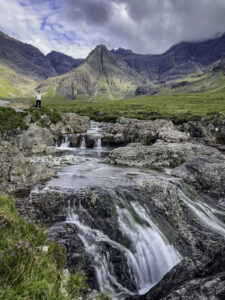 foot of the dramatic Cuillin Hills. A short walk from the roadside led us across open moorland to a series of crystal-clear pools connected by tumbling waterfalls. Fed by streams flowing directly from the Black Cuillin, the water glowed in striking shades of turquoise and blue-green, its clarity so sharp that every stone beneath the surface was visible.
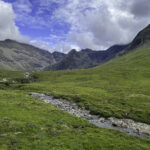
As we followed the stream upstream, each bend revealed another pool—some calm and glassy, others animated by rushing water spilling over smooth rock shelves. The setting felt almost otherworldly: rugged peaks rising sharply overhead, shifting clouds casting shadows across the hills, and the constant sound of water echoing through the valley. It was easy to understand how generations of Highland folklore grew from places like this.
The Fairy Pools have long inspired local legend, their name rooted in the belief that these shimmering waters were once visited by mythical beings. Even today, the atmosphere carries a sense of quiet magic. Hikers linger along the banks, photographers search for the perfect angle as light changes by the minute, and on warmer days a few fearless visitors brave the frigid water for a quick swim—an act that feels both exhilarating and slightly unreal in such a setting.
With the jagged Cuillin ridgeline looming above us and the peaceful rush of water at our feet, our visit to the Fairy Pools captured everything that makes the Isle of Skye so unforgettable—its wild beauty, deep sense of myth, and the feeling that nature here remains very much in command. Click on thumbnail to view