 The stretch of Portugal’s northern Atlantic coast between Lisbon and Porto is a region shaped by seafaring tradition, medieval heritage, and resilient coastal culture. Once frequented by Phoenician and Roman traders, these shores later became important medieval fishing and defensive outposts, guarded by fortresses such as Peniche’s 16th-century bastion and the hilltop citadels found further north.
This coastline grew around fishing villages, monastic communities, and early Christian pilgrimage routes. Towns like Nazaré, Figueira da Foz, and Póvoa de Varzim developed strong maritime identities centered on fishing, boatbuilding, and salt production. Inland, small stone churches, granaries, and historic town centers reflect centuries of rural and religious tradition.
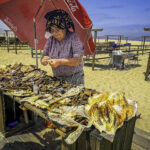
Culturally, the region is known for its folk costumes, religious festivals, and distinctive northern Portuguese character. Markets along the coast still showcase dried fish, shellfish, and agricultural products tied to generations of coastal life. The area around Viana do Castelo, in particular, is famous for its traditional gold filigree jewelry, local embroidery, and the historic devotion associated with the Sanctuary of Santa Luzia overlooking the sea.
Windswept beaches, rugged cliffs, and forested hills define the natural landscape, while centuries-old port towns and fishing communities preserve a deep connection to the Atlantic. Together, the region from Peniche to Viana do Castelo represents one of Portugal’s most authentic cultural corridors—where tradition, maritime heritage, and history meet along the northern coast.
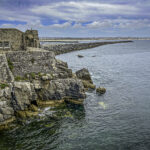
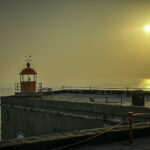
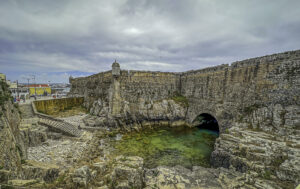 As we continued our journey of discovery north, our first stop was Peniche, a town dramatically situated on a rocky peninsula that juts boldly into the Atlantic. For centuries, Peniche has been one of Portugal’s most important fishing communities and maritime strongholds. Its strategic position made it a natural gateway for fishermen, traders, and navigators who depended on the region’s rich coastal waters and sheltered coves. Even today, the town’s identity remains deeply intertwined with the sea—from its bustling harbor filled with brightly painted boats to the enduring local tradition of bobbin lace-making, a delicate craft practiced by generations of Peniche artisans.
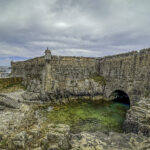
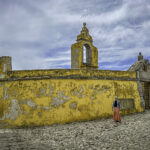
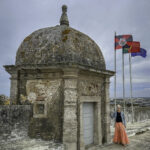
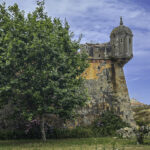
Overlooking the ocean stands the imposing Fortaleza de Peniche, a 16th-century coastal fortress built to protect Portugal’s shores during a period marked by pirate raids, naval rivalry, and shifting European powers. Its thick stone walls, angled bastions, and commanding views over the Atlantic served as a crucial line of defense for centuries. In the 20th century, the fortress took on a very different role as one of the most notorious political prisons of the Estado Novo dictatorship. The stories of resistance that emerged from within its cells—including several daring escapes—have since transformed the fortress into a powerful symbol of Portugal’s struggle for freedom and democracy. Click on thumbnail to view images

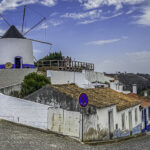
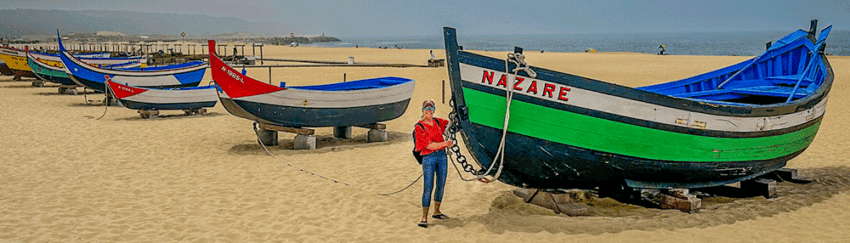
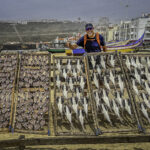
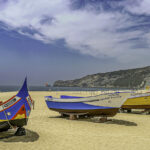
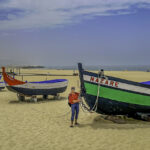
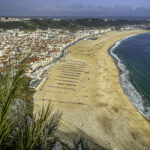
Our next stop was the beautiful coastal town of Nazaré, once a quiet fishing village on Portugal’s central coast, has deep roots in maritime tradition. For centuries, the town was known for its wooden fishing boats 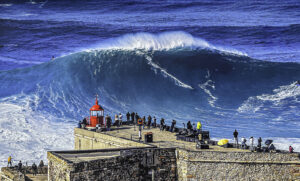 painted in bright colors, its women dressed in traditional seven-layered skirts, and its strong devotion to the Sanctuary of Our Lady of Nazaré atop the cliffs. Fishing, drying cod and sardines, and life shaped by the Atlantic defined Nazaré’s identity well into the 20th century.
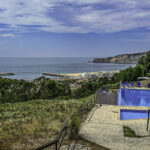
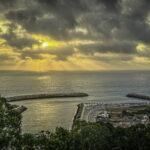
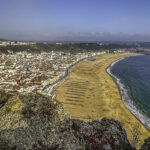
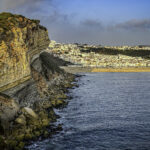
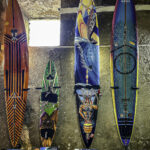
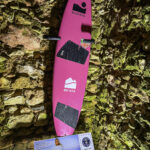
In recent decades, Nazaré has gained international fame for a very different reason: its giant waves. While once known primarily as a humble fishing town, it is now celebrated as one of the world’s premier destinations for big-wave surfing. The immense underwater Nazaré Canyon, which plunges thousands of meters deep just offshore, acts as a natural amplifier—funneling powerful Atlantic swells directly toward Praia do Norte. This unique geological formation creates some of the largest surfable waves on the planet, often reaching heights of 60 to 80 feet, and occasionally even higher. Since the early 2010s, when Garrett McNamara first rode a record-breaking wave here, Nazaré has attracted elite surfers from around the globe, each hoping to challenge the 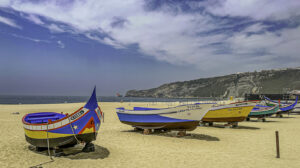 ocean’s raw power and perhaps set a new world record. The spectacle draws thousands of spectators each winter, transforming quiet cliff tops into natural stadiums overlooking waves of almost unimaginable scale.
Yet despite this dramatic transformation, Nazaré retains much of its traditional charm. The upper town of Sítio, perched on a cliff high above the sea, still offers sweeping views and a sense of timelessness. The old fishing quarter near the main beach remains active, with brightly painted boats pulled onto the sand and locals continuing rituals tied to the sea, from drying fish in the open air to maintaining age-old festival traditions. The influence of the ocean—both gentle and ferocious—continues to shape local life in countless ways.
Today, Nazaré blends its historic fishing culture with a modern reputation for awe-inspiring natural spectacle, creating a coastal destination unlike any other in Portugal. It is a place where ancient maritime heritage and extreme sports coexist, making Nazaré one of the country’s most distinctive and unforgettable seaside towns. Click on thumbnail to view images




We loved Nazaré and were sorry to say goodbye. Moving away from the coast our next stop was Alcobaça, located in Portugal’s fertile central region, is best known for its monumental Monastery of Santa Maria de Alcobaça, one of the country’s most important 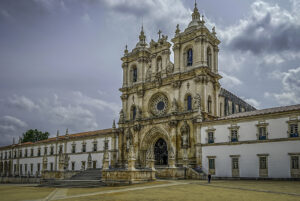 medieval landmarks. Founded in 1153 by Portugal’s first king, Afonso I, the monastery was given to the Cistercian Order in gratitude for their support during the foundation of the kingdom. Over the centuries, it became a major spiritual, agricultural, and cultural center, helping shape early Portuguese identity.
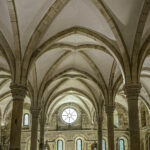
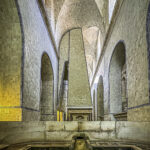
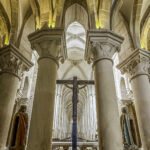
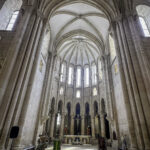
We toured the monastery’s vast Gothic church—the first fully Gothic structure in Portugal—an architectural milestone that introduced new ideas of height, luminosity, and spiritual clarity to the Iberian Peninsula. Built by the Cistercian order beginning in the 12th century, the church reflects the monks’ guiding principles of simplicity, harmony, and contemplation. Its soaring nave, supported by slender columns and pointed arches, draws the eye upward in an unbroken sweep of stone and light. The austere walls, devoid of elaborate decoration, emphasize pure form and proportion, allowing the natural play of sunlight to define the space throughout the day.
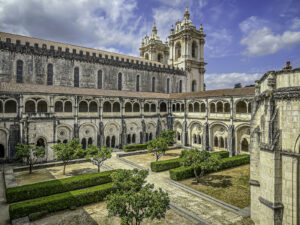 This restrained elegance stands in deliberate contrast to the adjoining cloisters and later Baroque additions, where richly carved capitals, decorative tracery, and Renaissance flourishes reveal centuries of artistic evolution within the monastery complex. Walking from the serene austerity of the church into these later spaces highlights the changing tastes and influences that shaped Portugal’s religious architecture over time.
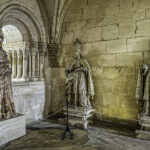
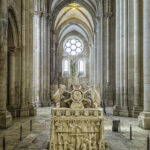
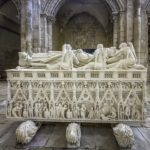
Within the transept lie the ornate tombs of King Pedro I and Inês de Castro, placed opposite one another so that, according to legend, the lovers may face each other on Judgment Day. Their tragic 14th-century love story—Inês murdered on royal orders, and Pedro later declaring her queen in death—has become one of Portugal’s most enduring and haunting legends. The tombs themselves, intricately carved with scenes of angels, kings, and medieval iconography, serve as both works of art and poignant reminders of a romance that has captured the Portuguese imagination for generations.
Around the monastery, the town of Alcobaça grew as an agricultural hub supported by the monks’ sophisticated irrigation systems, orchards, and mills. Today, Alcobaça retains a peaceful charm, with cafés, gardens, and traditional pastry shops lining the streets around the imposing monastic complex. Click on thumbnail to view images
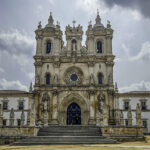

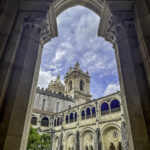
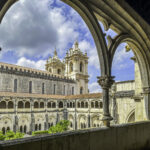
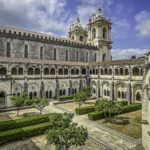
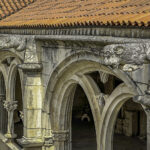
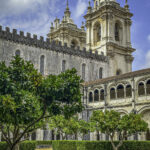
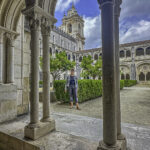
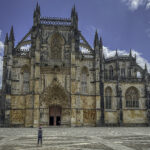
From Alcobaça we continued on to Batalha, a small town in central Portugal, and home to the magnificent Monastery of Santa Maria da Vitória, one of the greatest architectural achievements of the 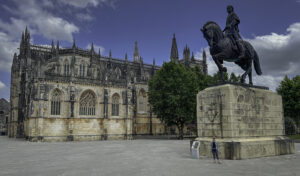 Portuguese Middle Ages. The monastery was founded by King João I in gratitude for Portugal’s decisive victory over Castile at the Battle of Aljubarrota in 1385—a triumph that secured the nation’s independence and the rise of the Avis Dynasty. Construction lasted nearly two centuries, and the result remains a masterpiece of Gothic and Manueline design.
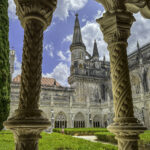
The monastery’s soaring facades, intricate stone tracery, and richly ornamented doorways reflect not only deep religious devotion but also a powerful expression of emerging Portuguese national identity. Built to commemorate the 1385 victory at the Battle of Aljubarrota, the complex stands as a monumental celebration of independence and the dawn of Portugal’s Age of Discovery. Its blend of Gothic, Manueline, and later Renaissance elements reveals the evolving artistic influences that shaped the country during this transformative period. Each facade, window, and sculpted arch seems to proclaim both faith and royal prestige.
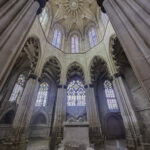
I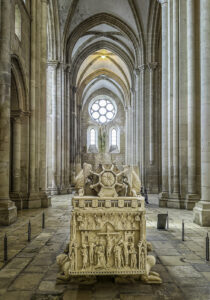 nside, the Founders’ Chapel holds the beautifully crafted tombs of King João I and his English queen, Philippa of Lancaster, whose marriage sealed the enduring Anglo-Portuguese Alliance. Their effigies rest hand in hand—an unusually tender depiction in medieval tomb sculpture—symbolizing unity in both life and legacy. Surrounding them are the tombs of their renowned children, including Prince Henry the Navigator, whose vision and leadership helped launch Portugal’s global explorations, as well as future kings Duarte and Pedro. The chapel itself, with its octagonal design and elegant vaulting, feels like a serene sanctuary honoring both family and nation.
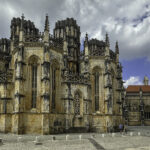
Nearby lie the extraordinary Unfinished Chapels—an open-air masterpiece of ambition and artistry. Intended as a grand royal mausoleum, the project was never completed, leaving a roofless circular enclosure that opens dramatically to the sky. Yet the unfinished state only enhances the effect, drawing the eye upward along soaring portals and lavish Manueline stonework. Spiraling columns, maritime motifs, armillary spheres, roped carvings, and delicate sculptural details celebrate Portugal’s seafaring triumphs and the exuberant creativity of the early 16th century. Even in their incomplete form, the chapels stand as one of Portugal’s most exceptional architectural achievements.
The town of Batalha grew around this monumental complex, shaped by centuries of pilgrim activity, monastic influence, and royal patronage. Today, Batalha remains a quiet yet deeply historic place where Portugal’s medieval identity and its Age of Discovery are reflected in one of the most remarkable buildings in the country. Click on thumbnail to view images
One of our favorite places in Portugal, Aveiro offered the perfect setting for several days of rest and relaxation. With its gentle pace, fresh coastal air, and postcard-perfect scenery, it quickly became a place we were reluctant to leave—a charming blend of maritime heritage, colorful architecture, and laid-back coastal living.
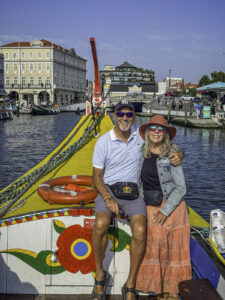
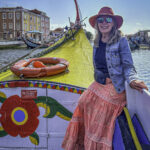
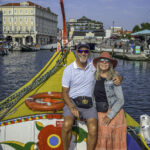
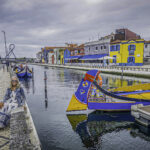
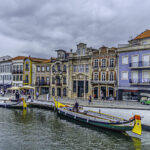
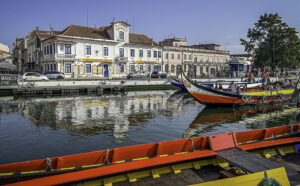 Aveiro, often called the “Venice of Portugal,” is a coastal city known for its scenic canals, brightly painted boats, and elegant Art Nouveau buildings that line its waterside avenues. Once an important medieval salt and fishing port, the city grew around the Ria de Aveiro, a vast lagoon whose tides and channels shaped local life for centuries. The waterways that wind through the center are more than decorative—they are the living remnants of a working lagoon culture. Traditional moliceiro boats, long and slender with vividly painted prows, once harvested seaweed used as fertilizer for local agriculture. Today, they glide gracefully through the canals carrying visitors, their presence adding color, charm, and a sense of continuity with Aveiro’s maritime past.
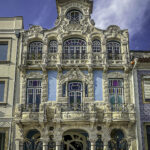
The old quarter is a delightful mix of tiled façades, graceful iron balconies, bustling markets, and pedestrian-friendly streets. Art Nouveau gems—delicate curves, floral motifs, and ornate window frames—reflect the city’s prosperity in the early 20th century and give Aveiro a distinctive 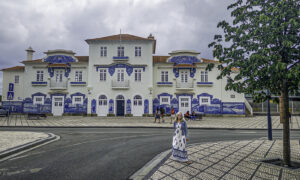 architectural personality. Riverside promenades invite long, peaceful strolls, while cafés spill onto sunny squares where locals gather for conversation and traditional sweets such as ovos moles. We tried the moles and determined it must be an acquired taste. Just beyond the city center, the shimmering salt pans recall one of Aveiro’s oldest industries, their geometric pools turning golden at sunset as salt workers continue a tradition dating back more than a thousand years.
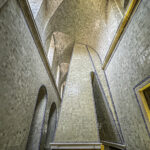
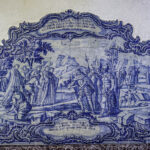
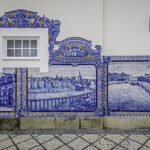
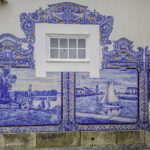
The Aveiro train station is renowned for its exquisite azulejo tile panels, installed in the early 20th century as part of Portugal’s artistic embrace of decorative ceramics. These blue-and-white tiles depict scenes from daily life in the region—fishing, salt harvesting, local festivals, and maritime traditions—creating an open-air gallery that reflects Aveiro’s cultural and economic heritage. The station’s façades are among the finest examples of azulejo storytelling in Portugal, offering travelers an immediate sense of place as they arrive in the city.
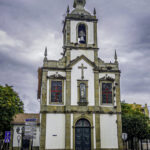
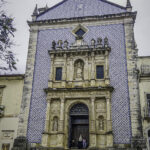
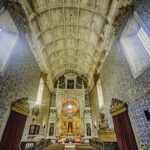
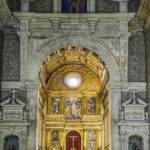
The Church of the Misericórdia in Ovar is a graceful example of northern Portugal’s religious architecture, blending Renaissance structure with the region’s iconic azulejo artistry. Originally built in the 16th century as part of the charitable Misericórdia brotherhood, the church served both spiritual and social roles—providing worship space as well as community support for the needy. Its façade is adorned with blue-and-white azulejo tiles, a hallmark of Ovar’s strong ceramic tradition, depicting 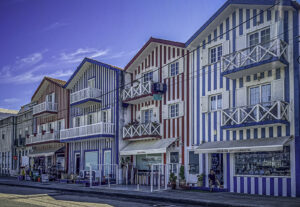 biblical scenes and ornamental patterns that reflect the craftsmanship of the period. Inside, the church features gilded woodwork, traditional altarpieces, and a serene atmosphere that highlights its centuries-old devotion. Standing near the heart of Ovar’s historic center, the Church of the Misericórdia remains an enduring symbol of faith, charity, and local artistic heritage.
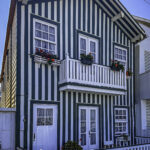
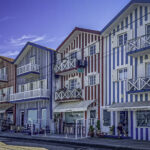
Across the lagoon lies Costa Nova, a beloved seaside village famous for its cheerful striped wooden houses, or palheiros. Originally simple storage huts used by fishermen to keep nets and equipment dry, these structures evolved into brightly painted beach cottages whose bold vertical stripes—in reds, blues, yellows, and greens—create one of Portugal’s most photogenic coastal scenes. Between the Atlantic beaches, the lagoon boardwalks, and the lively waterfront cafés, Costa Nova perfectly complements Aveiro’s charm, offering a relaxed seaside atmosphere ideal for unwinding.
Together, Aveiro and Costa Nova provided an unforgettable combination of beauty, history, and serenity—truly one of the highlights of our time in Portugal. Click on thumbnail to view images

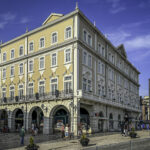
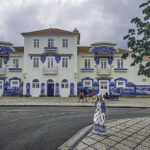
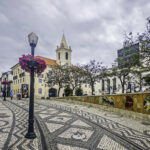
As we traveled just south of Porto, we stopped in Ovar, a coastal town on Portugal’s northern shoreline known for its deep connections to traditional culture, maritime 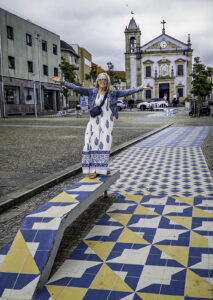 heritage, and distinctive architecture. Situated between the Atlantic Ocean and the tranquil lagoons of the Ria de Aveiro, Ovar developed over centuries as a humble yet industrious community shaped by fishing, salt production, and the rhythms of coastal life. The surrounding landscape—marked by rolling dunes, dense pine forests planted to stabilize the shifting sands, and fertile fields—has long supported a blend of agriculture and seafaring activity that defined the daily lives of its residents. These natural features, together with the town’s strategic proximity to major trading routes, helped Ovar evolve while retaining its strong regional identity.
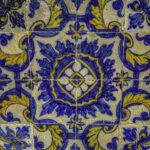
One of Ovar’s most celebrated cultural features is its remarkable tradition of azulejo tilework. The town proudly bears the nickname “The City of Azulejos”, a title earned through the abundance of buildings adorned with colorful ceramic tiles from the 19th and early 20th centuries. These vibrant façades—gracing chapels, townhouses, train stations, storefronts, and civic structures—form an open-air gallery of pattern, color, and storytelling. The tiles range from geometric designs and floral motifs to narrative panels portraying saints, historical events, and local symbols. Together, they showcase not only the artistry and craftsmanship of regional tilemakers but also Ovar’s enduring commitment to preserving a visual heritage that remains an essential part of its identity. Click on thumbnail to view images